
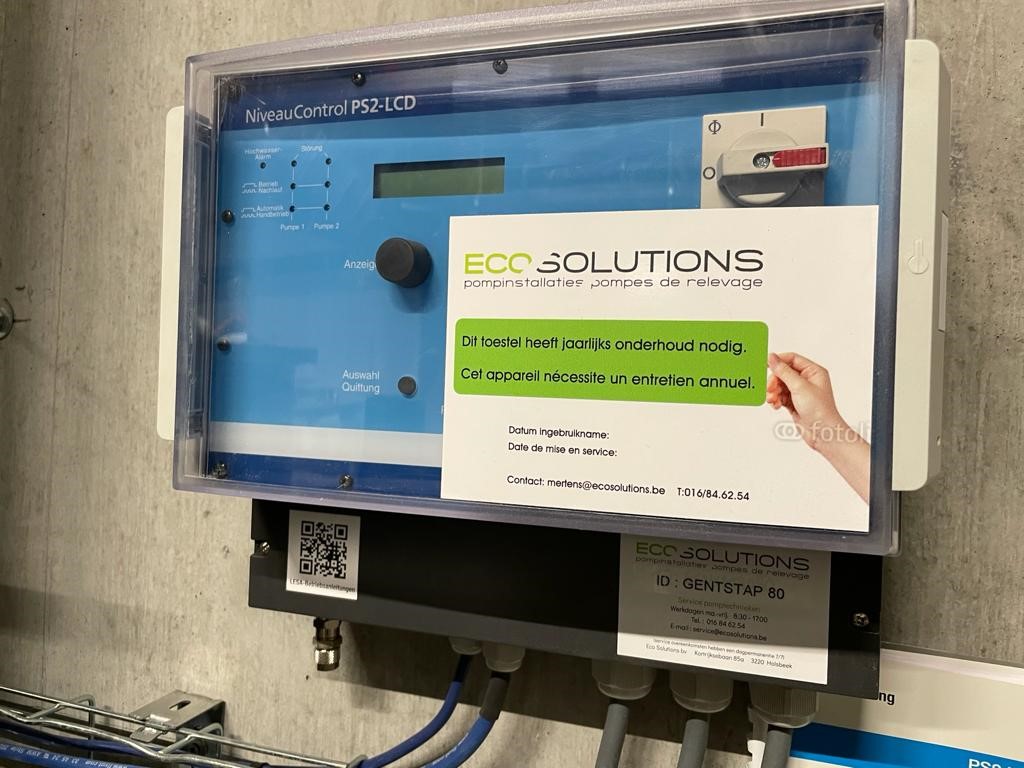
Integrated water management means that the engineering, prefabrication, automation, transportation, commissioning, and maintenance of a pump station, separator, or storage tank are carried out as a single, coordinated process. This ensures that all technical disciplines are aligned from the outset. This saves time on-site, minimizes the need for coordination between parties, and results in a system that operates reliably over the long term.
In a nutshell
- Pump pits, buffer tanks, and separators are increasingly being equipped with level sensors, alarms, electrically operated valves, and automation systems.
- An integrated approach combines six steps: engineering, custom prefabrication, automation, transportation, commissioning, and service & maintenance.
- Prefabricated HDPE solutions (pump stations, inspection chambers, oil and gasoline separators, storage tanks) are designed and manufactured to meet the specific requirements of each project.
- Automation can be built in during production, so that the well or tank arrives at the site ready for connection.
- For contractors, this means less coordination between parties. Architects and engineering firms have a single technical partner from the design phase onward.
What is integrated water management?
Integrated water management is an approach in which a single partner coordinates the entire process of a water system: from the initial calculations to post-commissioning maintenance. The alternative is to outsource the design, manufacturing, pump technology, and control systems separately, with these components coming together only on-site.
Deschacht serves as the lead partner in this project. The engineering division supports architects, engineering firms, contractors, road builders, and earthwork contractors starting from the engineering phase, including BIM engineering, through to commissioning and maintenance.
Why is a pump pit more than just an underground structure today?
A modern pump pit, buffer tank, or separator is a technical system and no longer just an underground reservoir. More and more systems are being equipped with level sensors, alarms, electrically controlled valves, and intelligent automation.
As a result, various disciplines must be coordinated:
- the structure itself (dimensions, materials, connections)
- pumping technology (number of pumps, capacity)
- electromechanics and control systems (measurement, alarms, regulation)
- maintenance (accessibility, follow-up)
If those disciplines are only coordinated on-site, it creates additional coordination work. If that is done in advance during the design phase, the system installed on-site will already be technically well-thought-out.
What steps are involved in an integrated water management process?
An integrated process consists of six consecutive steps. Each step is aligned with the next:
- Engineering: technical analysis, sizing, and project optimization in accordance with applicable laws.
- Custom Prefabricated Structures: production of prefabricated HDPE pump pits, oil and gasoline separators, inspection pits, and storage tanks.
- Automation: installation of level sensors, alarms, electrically controlled valves, and intelligent control systems.
- Transportation: organized just-in-time delivery of prefabricated solutions to the construction site.
- Commissioning: technical inspection and commissioning of the system.
- Service & Maintenance: follow-up to ensure reliable long-term operation.
What questions does the engineering team address in advance?
The engineering process begins with the specific challenge of the project. In doing so, the research department answers four key questions:
- Capacity: What capacity does the system need?
- Water Management: Should the water be collected, stored, or drained? Read more about Storing or infiltrating rainwater.
- Regulations: What rules apply to the project?
- Service Life: How can the system remain reliable and easy to maintain in the long term?
Only once those questions have been answered will the solution be technically developed and sized.
What automation systems can be installed in a well or tank in advance?
Prefabricated wells and tanks can be equipped with automation and monitoring systems during the manufacturing process. This turns a standard prefabricated well or tank into a system that is ready for connection and use.
Possible equipment:
- level measurements
- alarm notifications
- electrically controlled butterfly valves
- Valves and Control Systems
- pump controls
- measurement and control systems
Because these components are installed at the factory, they no longer need to be installed later on-site.
Who does what in an integrated water management project?
The initiative is supported by three complementary parties within a single group and partner network:
| Party | Role in the process | Expertise |
|---|---|---|
| Deschacht | Central partner and point of contact | Engineering, technical consulting, coordination |
| Collinet (sister company) | Development and Production | Custom Prefabricated HDPE Products: Pump Wells, Inspection Chambers, Oil and Gas Separators, Storage Tanks |
| The Flow Group (partner) | Pump Technology and Electromechanical Section | Pump Technology, Control Systems, Commissioning, and Maintenance |
What are the benefits of an integrated approach for each target group?
Each party involved in the construction process derives a different benefit from it:
| Target Audience | Benefit |
|---|---|
| Architects and engineering firms | A single technical partner who works with you from the design phase onward |
| Contractors, road builders, and earthwork contractors | Time savings, less coordination between different parties, and a solution that has been thoroughly thought through from a technical standpoint in advance |
| Building Owners | Sustainable, efficient, and low-maintenance systems |
What mistakes can you avoid with an integrated approach?
If the structural design, pump technology, and control systems are designed separately, typical coordination problems arise. An integrated approach helps prevent these:
- The well and the pumps are not coordinated: The dimensions of the well were not selected based on the pump configuration.
- Management as a Reflection: Level measurements and alarms are added only after installation, resulting in additional work on-site.
- No backup in case of a malfunction: At high flow rates without redundancy, the drainage system stops functioning as soon as a pump fails.
- Maintenance not scheduled: The system works upon delivery, but there is no long-term follow-up.
What are the rules governing the drainage of rainwater and wastewater in Belgium?
The design and construction of a water system must comply with applicable regulations. In Belgium, these regulations vary by region. Examples include the separate drainage of stormwater (RWA) and dry-weather drainage (DWA), as well as regional regulations regarding rainwater. For oil and gasoline separators In addition, specific product standards apply.
If you're unsure, have the research department determine which rules apply to your project. This is done during the engineering phase.
What does integrated water management look like in practice?
Real-World Example
Drainage Solution for a Renovated Banquet Hall
| Architect | Recraft |
| Client | Beavers |
| Groundworker | Vos Construct |
| Solution | 2 pump pits, each with 2 pumps for smoke and heat exhaust and stormwater drainage |
For the renovation of a banquet hall, architect Recraft was looking for a solution for the discharge of smoke, heat, and water (RWA) and wastewater (DWA) and contacted Deschacht for this purpose. In collaboration with the client, Bevers, and the earthwork contractor, Vos Construct, two pump pits were installed, each equipped with two pumps.
Why two pumps per pump pit?
The dual-pump configuration offers two advantages:
- Capacity: sufficient drainage capacity to handle the high flow rate in a banquet hall.
- Operational Reliability: If one pump fails, the drainage system will continue to operate.
The project was implemented as a single integrated solution: from the technical design and custom prefabrication to a system that was ready for commissioning.
By coordinating all the technical details in advance, the installation went smoothly, and today we have a reliable and future-proof system.
Vos Construct, earthwork contractor
Frequently Asked Questions About Integrated Water Management
A conventional pump pit is an underground structure that collects and discharges water. A smart pump pit is equipped—already during manufacturing—with features such as level sensors, alarm systems, pump controls, and monitoring and control systems. It arrives at the job site ready to be connected.
Pump pits, inspection pits, oil and gasoline separators, and storage tanks can be designed and manufactured from HDPE to meet the specific requirements of each project. Production is handled by Collinet, the group’s sister company.
As early as possible, preferably during the design phase. This allows for the capacity, type of water management (collection, storage, or discharge), regulations, and maintenance to be coordinated in advance, so that fewer adjustments are needed on-site.
A dual-pump configuration increases capacity at high flow rates and ensures operational reliability: if one pump fails, the drainage system continues to operate. Whether this is necessary depends on the flow rate and the building's usage.
The pumping and electromechanical aspects—including commissioning and maintenance—are handled in collaboration with our partner, The Flow Group. This ensures that the system continues to be monitored even after completion.
Do you have a complex water management project?
The specialists at our engineering department are happy to work with you from the design phase through to commissioning.
Rudy Vandervost, Product Specialist for Separators
+32 (0)474 89 10 83 · [email protected]