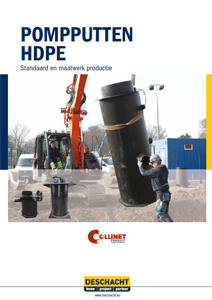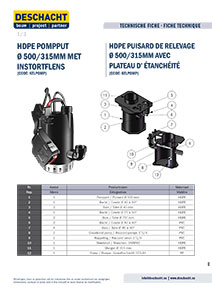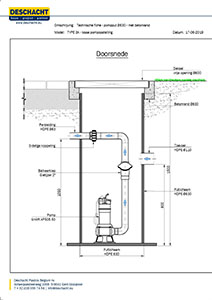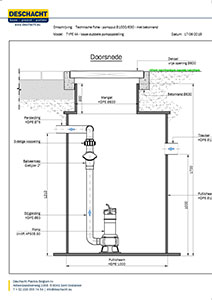
HDPE pump stations
Sustainable and waterproof solutions for controlled water management
In projects where gravity drainage is not sufficient, pump chambers ensure a controlled and reliable transport of water. Think of low-lying areas, industrial applications, or technical spaces where rainwater, wastewater, or lightly polluted water must be actively pumped.
With HDPE pump shafts, you opt for a system that combines flexibility, strength, and durability. Thanks to the material choice and design, these pump shafts are suitable for both standard applications and complex projects within industry, infrastructure, and non-residential construction.
Reliable operation in any project context
A well-designed pump station is essential for the operation of the entire drainage system. HDPE pump stations offer high reliability and are resistant to the loads encountered in underground installations.
Typical applications:
- cellars and underground parking garages
- industrial and technical spaces
- infrastructure projects
- zones where gravity drainage is not possible
Technical advice on pump pits
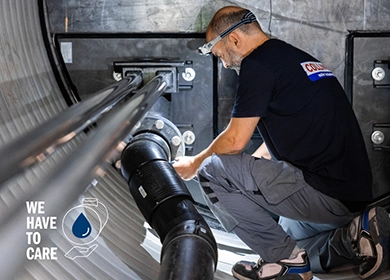
Why choose HDPE pump sumps?
HDPE (polyethylene) is an ideal material for pump pits due to its combination of durability and chemical resistance. In underground applications where moisture, loading, and aggressive environments come together, the material remains stable and functions reliably.
The result is a solution with a long lifespan and limited maintenance requirements, both in industry and infrastructure.
Standard solutions and custom pump pits
Our design agency helps you determine the type of pump pit you need and provides you with all the necessary technical data sheets and information.
Because we handle the design and production right from the start, we also develop custom systems tailored to your project, regardless of whether they are highly specific, complex, or large-scale. We can also supply pump-less sumps, as these need to be installed during excavation work. And after the work is completed and before handover, we send our technicians to install and commission the pumps, which can sometimes happen a year later.
Integration within the overall system
A pumping station never operates independently of the rest of the drainage system. Performance depends on the correct alignment between the pump, piping, and sizing.
Important points of attention:
- flow rate and capacity
- pump selection and control
- connection to the pipe network
- maintenance and accessibility
By integrating this properly, you prevent malfunctions and increase the reliability of the installation.
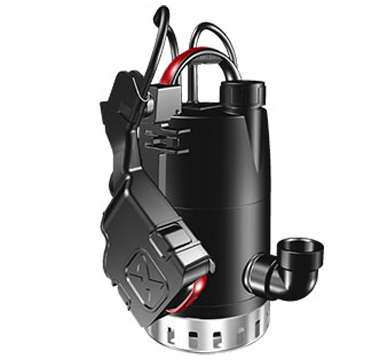
The pumps
We attach great importance to the choice of the pumps. They must deliver optimal efficiency in times of great need and be extremely reliable in all applications.
Both for pumping water with suspended solids (SS) and for a large flow rate of clear water that needs to be discharged, the pits are equipped with Grundfos pumps, the best in terms of hydraulics. These pumps are submersible and made of PP or stainless steel. Depending on the model, they are placed on guide rails with an automatic coupling or in a free-standing position.
A complete monitoring and control system is available upon request for constant optimization of the pump system.
FAQ
1. When do you choose a pumping station instead of gravity drainage?
A pump pit is necessary when the height difference is insufficient to drain water by gravity. This often occurs in low-lying areas, basements, or locations where the discharge point is higher than the water source.
2. How do you determine the correct sizing of a pump sump?
The sizing depends on the flow rate, the type of water (rainwater, wastewater), the pump capacity, and the operating frequency. A correct calculation prevents overloading and guarantees efficient operation of the system.
3. Why is HDPE suitable for pump sumps?
HDPE is chemically inert, corrosion-resistant, and completely waterproof. As a result, the structure remains intact in aggressive or humid environments, making the material particularly suitable for long-term underground applications.
4. When is customization necessary for pump sumps?
Customization is recommended when standard solutions do not meet project requirements, such as in the case of non-standard dimensions, complex connections, or specific industrial applications.
5. How is the water resistance of an HDPE pump sump guaranteed?
Water resistance is ensured by the material itself (HDPE is intrinsically waterproof) and by the quality of the joints and penetrations. Correct installation and connection are essential for this.