
Double-walled hydrocarbon (HCS) separators
What are the application areas of separators?
- process water: the remaining liquids originating from industrial processes, vehicle washing, and the cleaning of elements coated with oil.
- the runoff rainwater contaminated by oil originating from impermeable areas (parking lots, roads, factory courtyards, etc.)
- scattered polluted light liquids to protect surrounding areas such as at gas stations
- industrial process water
- car wash and vehicle wastewater
- water from surfaces with oil use
- rainwater from parking lots, roads and factory courtyards
- gas stations and other light hydrocarbon zones
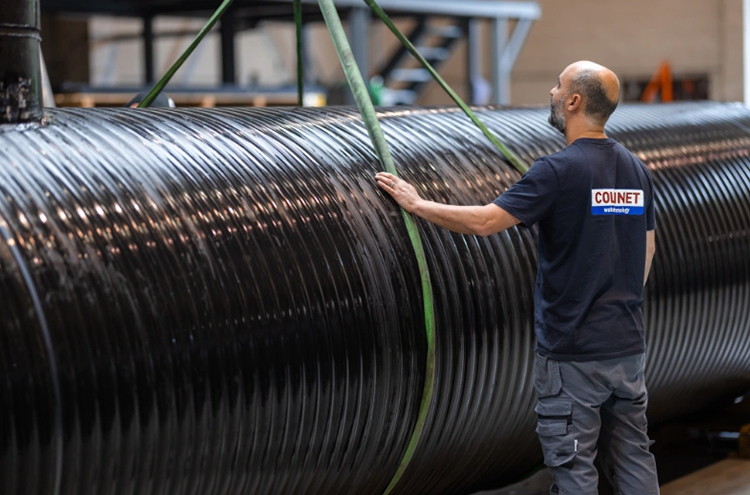
Double wall, double safety
Double wall, double safety!
Our oil separators are the sustainable and compliant solution for the most demanding environments. Manufactured from double-walled HDPE, they offer maximum protection against contamination and fully comply with EN 858-1. Furthermore, they are already prepared today for the amendments to VLAREM II, which will enter into force on 01.01.2028.
Choice of the double-walled or single-walled separator?
The choice of an oil-gasoline separator depends on the type of contamination to be treated.
Single-wall separators
- PE manufacturing by rotomoulding
- flow rate 1.5 to 30 L/sec
Double-walled separators
- HDPE Weholite pipes and sheets, completely double-walled
- Flow rates ranging from 3 to 200 l/s
- leak detection and automatic shut-off valves
- coalescence filter for residual content < 5 mg/l

We'd be happy to help you determine the right size for your unit using our online calculator.
What does Vlarem II mean for decouplers as of January 1, 2028?
It must be possible to provide a correct calculation of the nominal size of the separator.
The operator must inspect the hydrocarbon separator at least every three months and keep a logbook of this, unless the hydrocarbon separator is equipped with an alarm system.
Single-wall separators undergo an internal leakage test by an expert at least every six years.
Double-walled separators which are equipped with acoustic leak detection, an automatic shut-off valve and an alarm system, are exempt from that internal inspection.
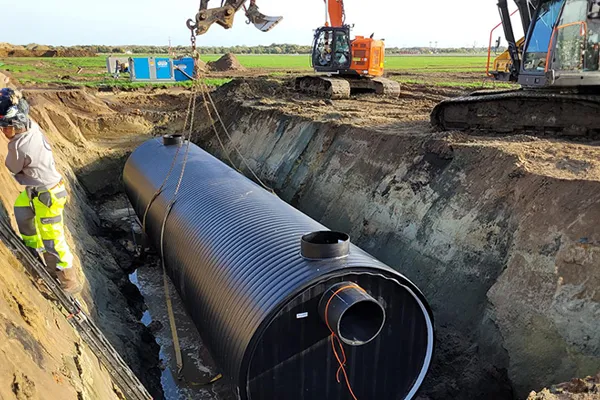
Why choose VLAREM II-compliant products now?
For projects in road construction, industrial construction, industry, architecture, and engineering firms, it is crucial to take future regulations into account. Our double-walled separators are ready for the stricter requirements of VLAREM II 2028, including:
- mandatory CE marking
- Proper sizing based on application and class using our calculation tool
- presence of a coalescence filter
- sampling point for effluent samples, integrated into the separator so no extra inspection chamber is needed
- our double-walled separators are fitted with an automatic shut-off valve and a leak detection connection anyway
Advice on separators?
Our specialists will help you correctly size your drainage system, taking into account factors such as the drainage surface area, rainfall intensity, type of paving, etc.
By adding a leak detection alarm and an oil alarm, you are exempt from the six-yearly internal inspection and from keeping a logbook. By investing now in VLAREM II-compliant systems, you save costs in the long term and prevent adjustments upon commissioning.

FAQ
1. What is the difference between a class 1 and class 2 hydrocarbon separator?
For discharge into surface water or infiltration, a class 1 separator is usually required.
2. When is a hydrocarbon separator mandatory?
An oil, fuel and grease separator is mandatory when wastewater or rainwater may be contaminated with oil or light liquids, for example at:
- parking lots and roads
- gas stations and logistics zones
- car wash facilities and repair shops
The separator prevents these contaminants from entering the environment or the sewer system.
3. How does a hydrocarbon separator work technically?
In a class 1 system, the coalescing filter ensures that small oil droplets coalesce and are removed more efficiently.
4. What standards and regulations must oil/water separators comply with?
In Flanders, additional obligations are imposed via VLAREM II, including stricter requirements regarding inspection and sizing from 2028.
5. How often must an oil/petrol separator be inspected and maintained?
According to applicable standards, an oil separator must:
- be maintained at least every 6 months
- be inspected regularly (e.g. checking oil and sludge levels)
Furthermore, in Flanders a periodic inspection (e.g. quarterly) is expected, depending on the installation and existing alarm systems.