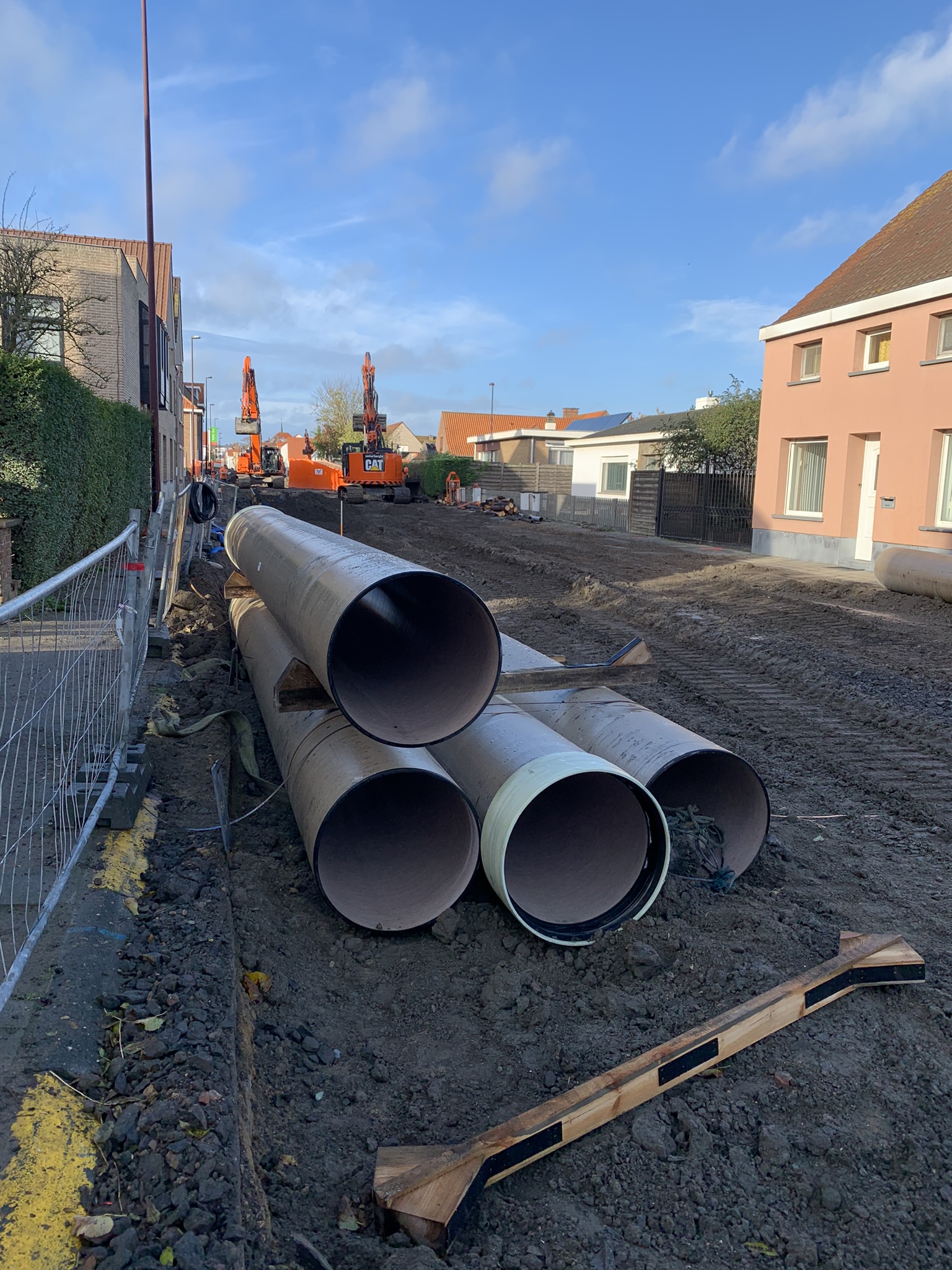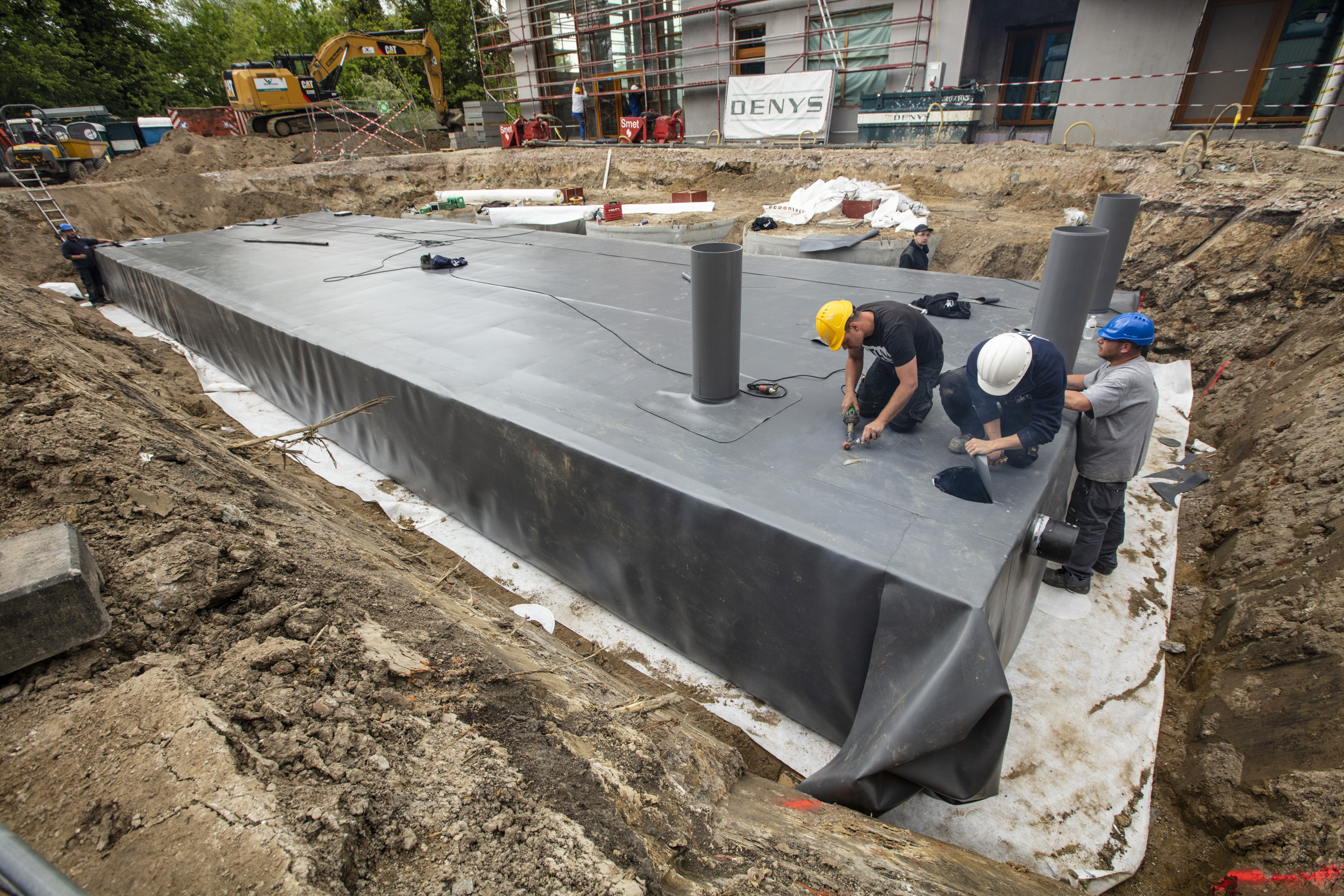
In sewer works, it is crucial to choose the right sewer pipe. During the construction of a separate sewer system in De Haan, contractor Vanlerberghe deviated from the prescribed vitrified clay pipes. Due to the poor soil conditions, the sewers had to be installed between a water-resistant screen and on an extra pile foundation, which meant a complex installation method. Therefore, the company, in collaboration with Deschacht, opted for glass fiber-reinforced plastic pipes.
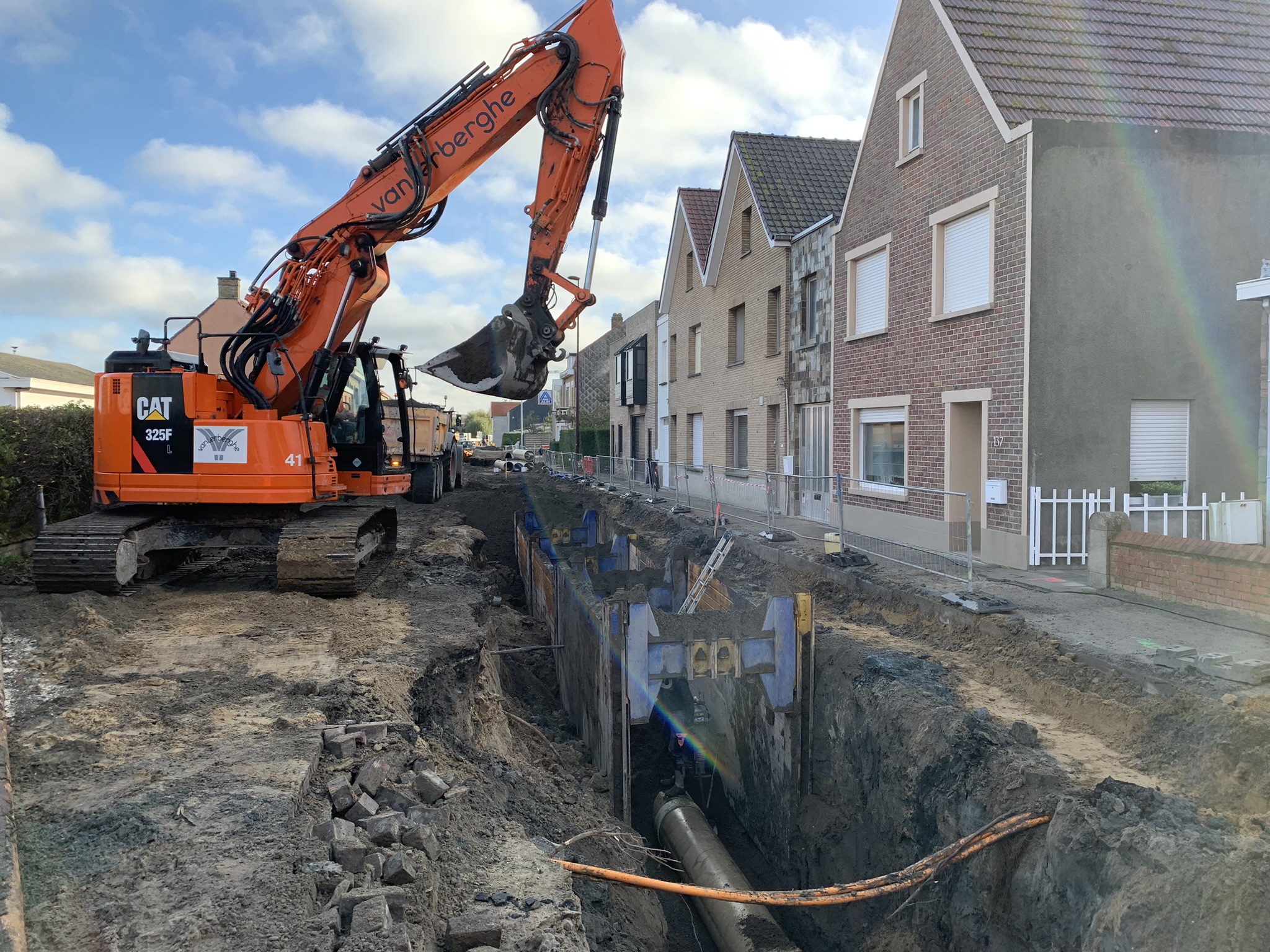
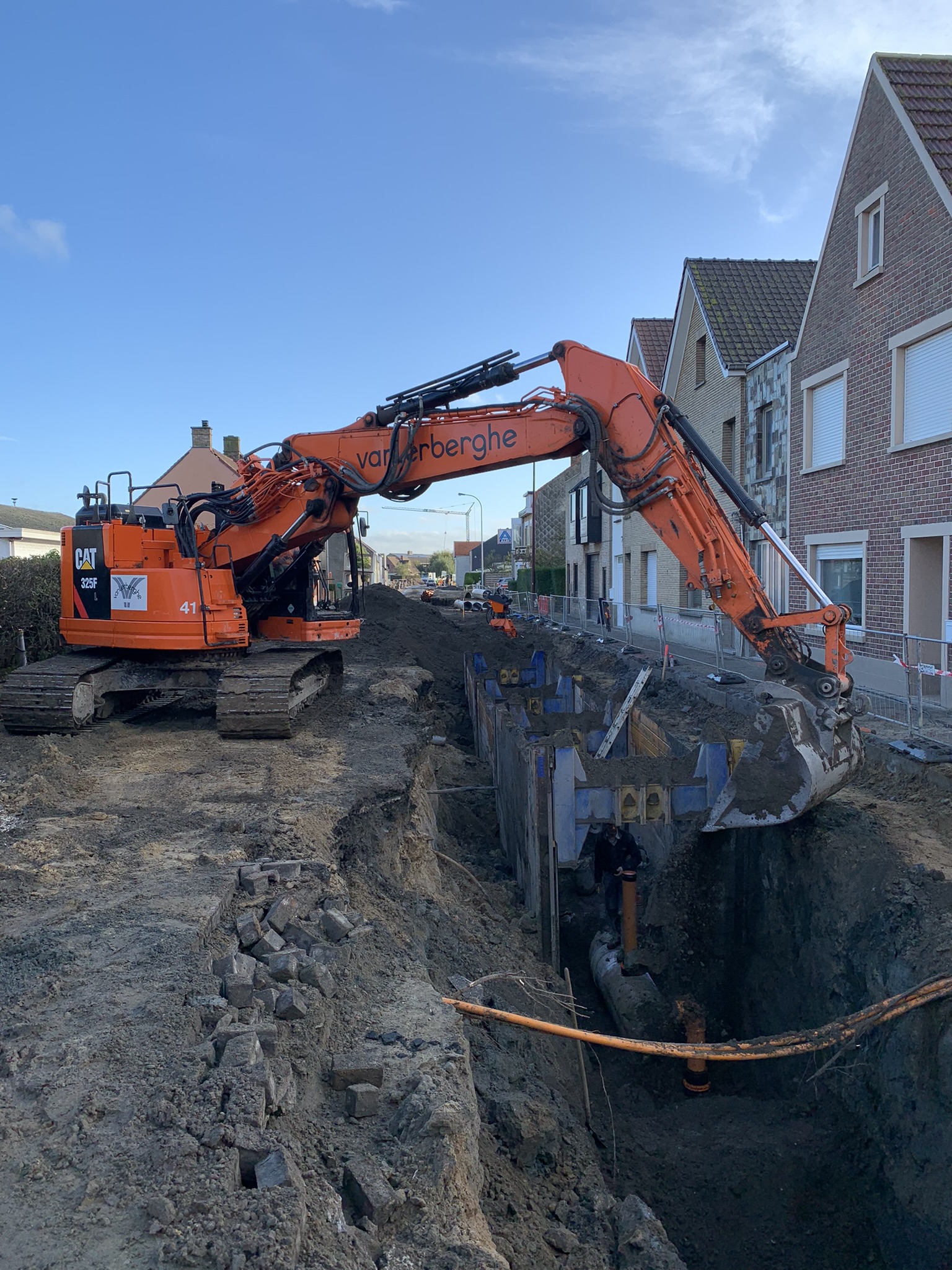
Vanlerberghe Construction Company specializes in sewerage works and underground concrete structures. Vanlerberghe's expertise is particularly useful in complex projects. And that expertise was needed for the replacement of an existing sewage system in Grotestraat in De Haan. “The design initially provided for the use of vitrified clay pipes, but given the difficult execution conditions—where, partly due to the water-retaining screen (a CSM wall, executed by subsidiary Omni-tech), the available trench width was very limited—we went looking for an alternative,” says Nicky Portier, site manager at Vanlerberghe. “In that case, the limited outer diameter of the GRP pipes is a major advantage.”
Chemically inert
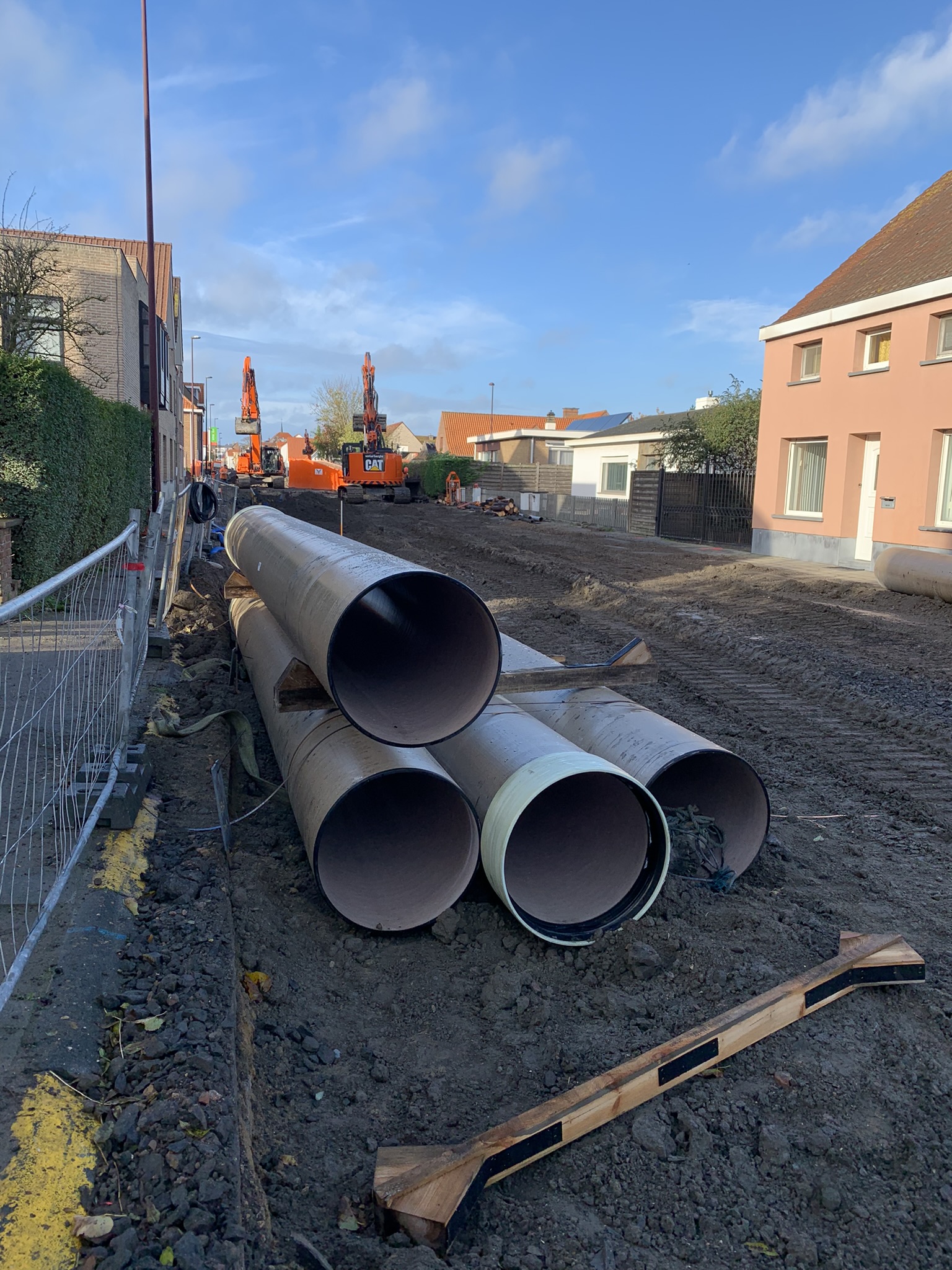
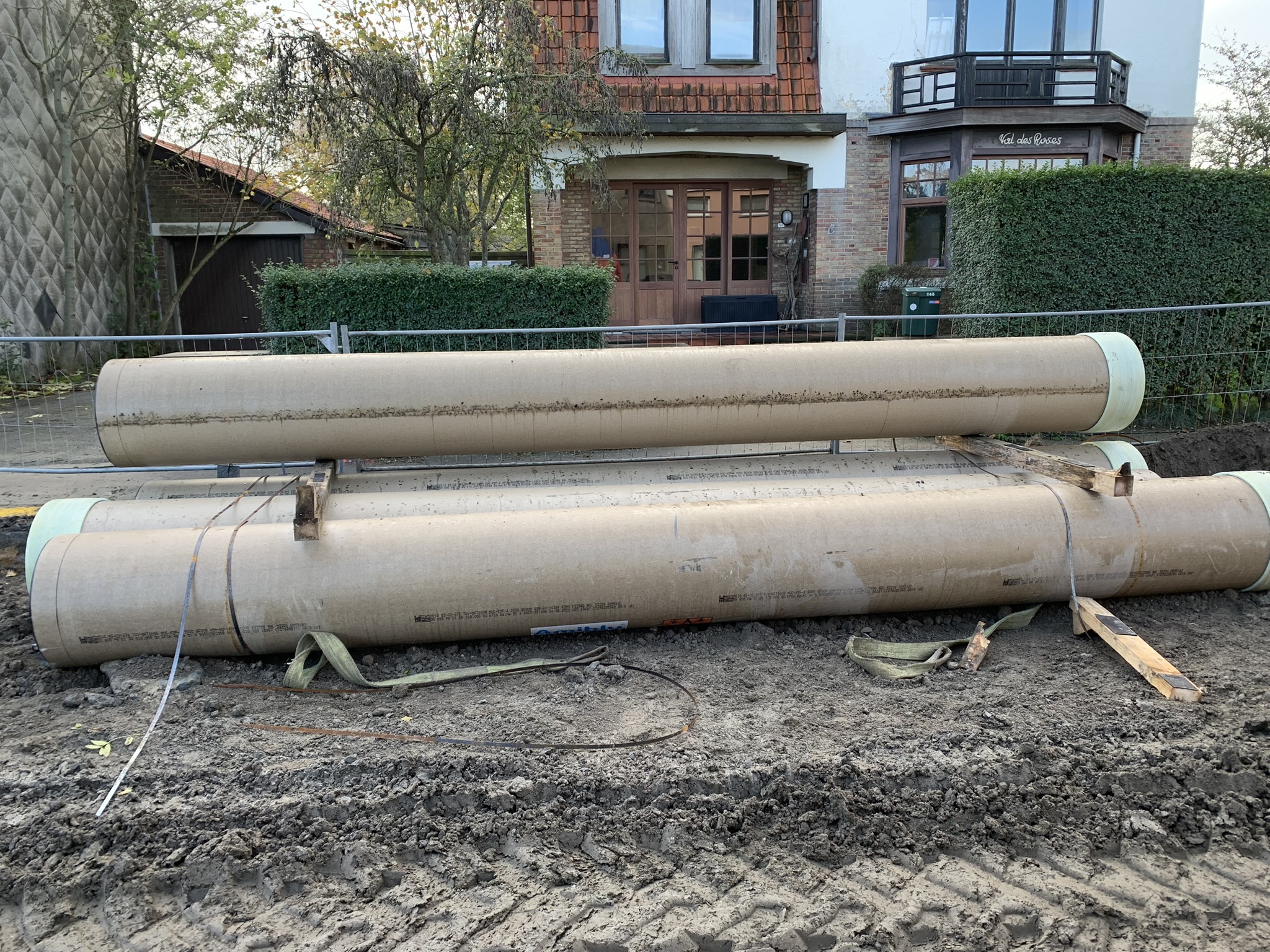
Vanlerberghe has been working closely with Deschacht for a long time, and once again found a solution in the range of the Belgian construction materials specialist: the glass fiber-reinforced plastic pipes, or GRP pipes, from Amiblu. Brecht De Meyer, Customer Service Manager for Road and Civil Engineering at Deschacht: “This is an exceptionally strong plastic pipe that is chemically virtually inert. It is a two-component pipe made of glass fibers and a polymer matrix—including epoxy and polyester resin—which enhances the pipe's chemical resistance. This makes the pipe exceptionally well-suited for conveying wastewater, as well as sulfur-containing products or sulfur vapors. In addition, compared to other pipes, the GRP pipe is very lightweight relative to its strength, which simplifies transport and installation.” Vanlerberghe has frequently worked with GRP pipes, and they proved to be an ideal solution for the project in De Haan as well. Deschacht supplied GRP pipes with diameters of 600 (200 meters), 700 (150 meters), and 800 (100 meters). “An additional challenge in this project was that very little space was provided for storing the pipes. That was another reason to choose GRP pipes, which have very thin wall thicknesses—unlike concrete pipes—and therefore take up less space,” Portier noted.
Better point load
The project is still in full swing, but site manager Portier is already pleased with the choice of GRP pipes. Portier: “We see an advantage in GRP pipes when installing them in poor soil conditions, where the pipes must be installed on a pile foundation. The GRP pipe can be considered a flexible pipe rather than a rigid pipe. After all, the planned vitrified clay pipes are much more susceptible to breakage due to point loads at the pile foundation. In addition, the GRP pipes are not brittle and much less susceptible to cracks or fissures, which in turn was an advantage when using limed recycled backfill materials.” “Moreover, we could once again rely on excellent cooperation with Deschacht, a valued partner who always helps look for a quick solution when problems arise,” Portier concludes.

Vanlerberghe bv
Sewer systems and collectors, force mains and pressure sewers, reinforced concrete structures, wastewater treatment plants, hydraulic engineering works, revetment, dewatering and foundation techniques, recycling and concrete plant.