
HDPE pipes for gas transport
Sustainable solution for the transport of pressurized gas
Beneath roads, streets, squares, and industrial estates lies an extensive network of pipelines responsible for the transport of essential media such as water, gas, and waste streams. Where traditional materials have their limitations, HDPE pipes (High Density Polyethylene) offer a reliable and future-oriented solution.
Thanks to their flexibility, strength, and chemical resistance, HDPE pipes are widely used today in utility piping, both for pressure applications and for trenchless techniques such as HDD.
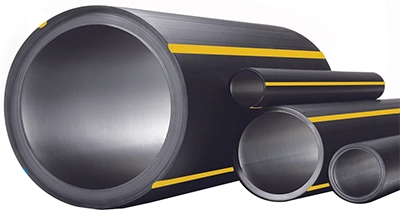
Specific application: HDPE gas pipes
For the transport of gas, strict requirements apply regarding safety, leak tightness, and mechanical performance. HDPE pipes meet these criteria perfectly and are therefore widely used within gas distribution networks.
An important advantage is that HDPE pipes can be joined using welding techniques (such as electrofusion or butt welding), creating a homogeneous and leak-free piping system.
Typical characteristics for gas applications:
- complete leak tightness through homogeneous joints
- resistant to internal pressure and external loads
- high resistance to cracking and stress corrosion cracking
- suitable for long, continuous routes without weak links
Because of this, HDPE gas pipes are a safe choice for both new installations and renovation projects.
Advice on gas pipes
The choice of the right pipe depends on pressure class, diameter, and installation method. Our specialists are happy to help you with the correct sizing and product selection.
Applications within gas networks
HDPE pipes are used in various types of projects:
- natural gas distribution networks
- connections to homes and industry
- renovations of existing pipelines
- extensions of utility infrastructure
For contractors and engineering firms, this means a solution that is both technically and operationally reliable.
Why choose HDPE pipes?
HDPE has evolved into a reference material within utility infrastructure. The combination of mechanical properties and durability makes it particularly suitable for underground applications.
Key benefits:
- high resistance to pressure and external load
- excellent flexibility (ideal for settlements and bends)
- corrosion-resistant and chemically inert
- long lifespan with minimal maintenance requirements
These properties ensure that HDPE pipes behave reliably, both during installation and in long-term operation.
FAQ
1. Why are HDPE pipes suitable for gas transport?
HDPE offers a combination of flexibility and mechanical strength, absorbing stresses during pressure variations and ground settlement without cracking or leaking.
2. How is leak tightness guaranteed in HDPE gas pipes?
Through the use of welding techniques such as electrofusion welding, homogeneous joints are created, causing the entire piping system to behave as a single closed entity without mechanical weak points.