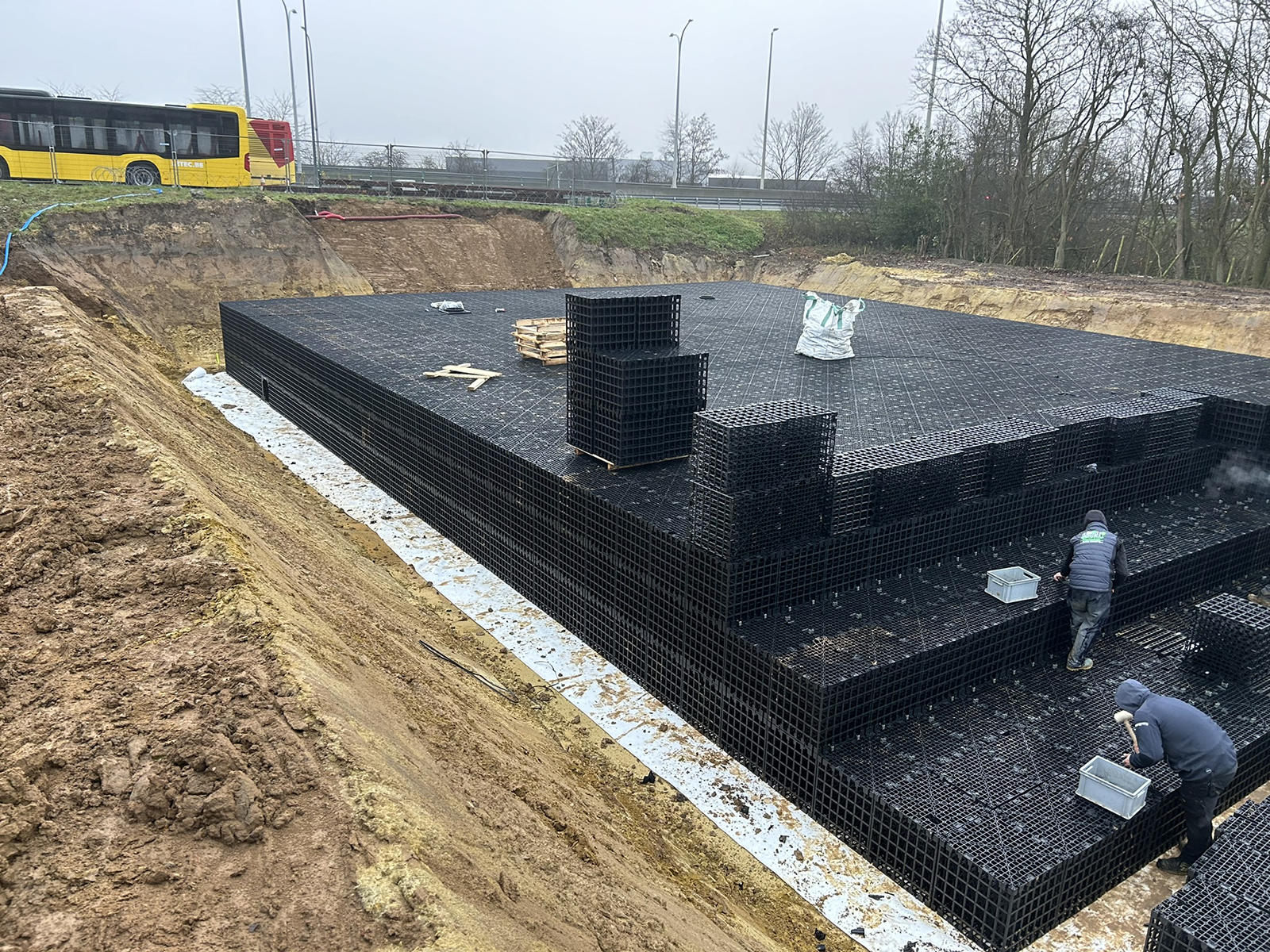
Commissioned by the City of Namur and Inasep, Rue Marcel Lecomte and the surrounding area in Wépion are undergoing a major redevelopment. The execution has been entrusted to Nonet SA from Jemeppe-sur-Sambre. Objective: to put an end to recurring problems with flooding, pollution of the watercourse, and chemical contamination. The City of Namur opted for a large-scale plan for the reconstruction of the roadways and the installation of a new sewage system. Total cost: 4.9 million euros.
Marcel Lecomtestreet, with its steep slope, poses a significant technical challenge. The originally planned concrete solutions proved difficult to implement. Due to the immense dimensions and the gradient of the road, the installation of concrete elements was particularly complex. Deschacht proposed an alternative in HDPE.
“Thanks to this lightweight and modular solution, we were able to facilitate installation in these complex conditions, reduce costs, and improve ease of installation for the crews,”
explains Samuel Mazzacavallo, Account Manager at Deschacht.
A completely separate sewer system
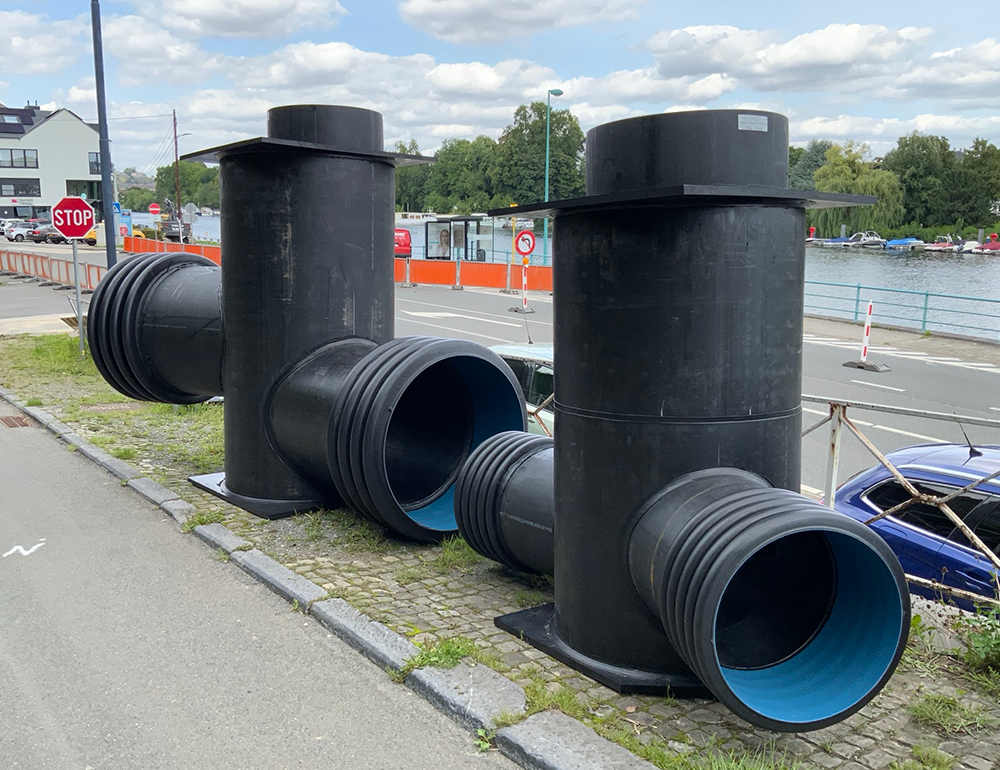
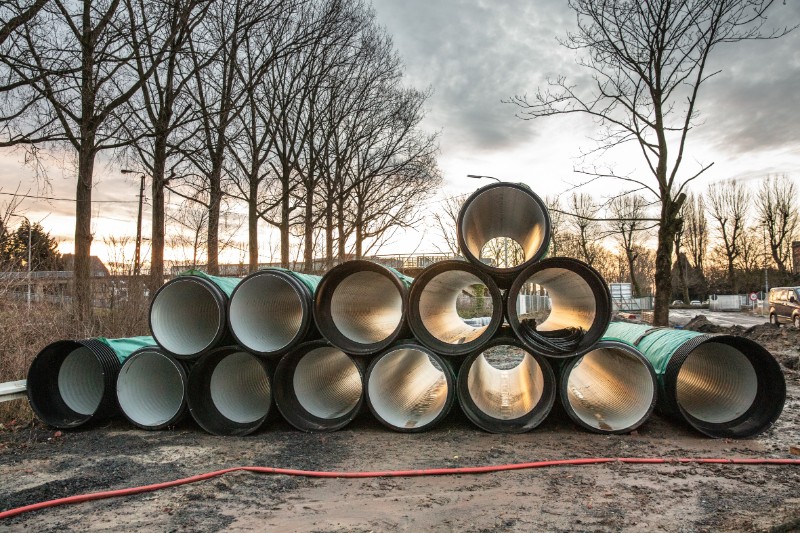
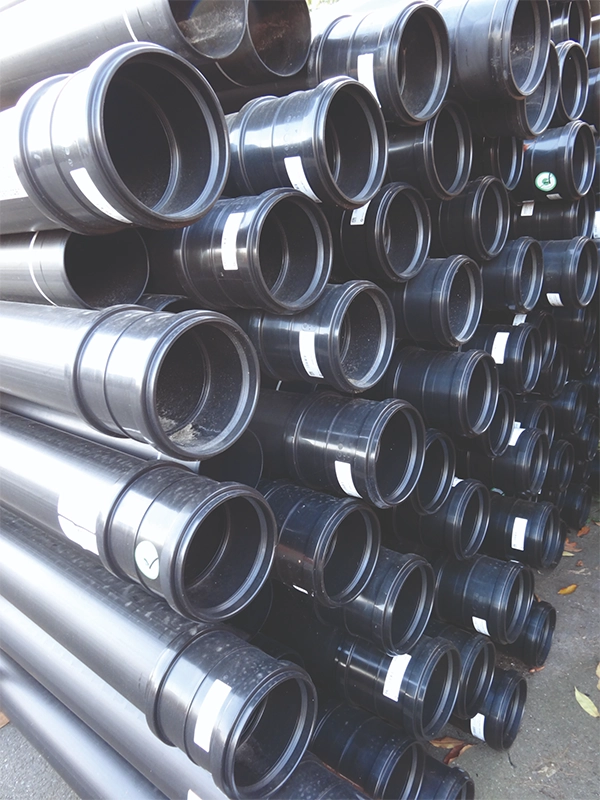
The project involves the installation of 3,660 meters of corrugated pipes (Ø 300 to 1000 mm) and an impressive number of inspection chambers. No fewer than 83 HDPE chambers, produced by Collinet, were supplied. Depending on their function, they were manufactured in a single-wall design or in double-wall Weholite Ø 1500 mm for large connections of Ø 1000. Each chamber was custom-calculated and designed by our engineering department: customized connections, a flat bottom for rainwater, a profiled bottom for wastewater, integrated PE rungs, and Ø 800 mm riser sections with type D400 cast-iron covers. This “plug & play” design ensures quick and easy installation—a decisive advantage in such a steep street.
Why so many potholes?
To accommodate the steep slope of the street, the network was split into multiple segments. As a result, many inspection chambers were needed to prevent the gradient between two points from becoming too large. Some chambers were given a slight interval to gradually compensate for the difference in elevation. The network is separate: rainwater and wastewater flow in separate pipes. This configuration better protects the watercourse, limits the risk of overflows, and optimizes downstream wastewater treatment.
The added value of cooperation
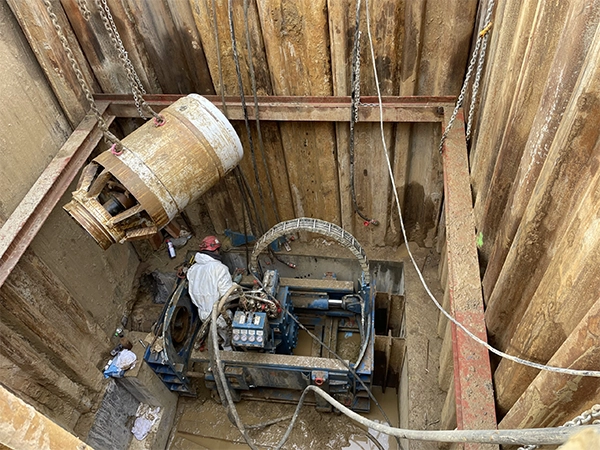
The project required ongoing consultation between Nonet, the City of Namur, Inasep, and our engineering department. During several meetings, including one at our site in Herstal, we were able to concretely demonstrate how efficient the HDPE solutions are. A test pit was even constructed to convince the client. The result: full approval of the Deschacht variant, featuring custom-made elements perfectly tailored to the specific site conditions.
“Light, robust and ideal for steep slopes – these products enabled a faster and safer execution,”
testifies Gilles Baude, site manager at Nonet. Deschacht is thus contributing to a large-scale public project that sustainably improves the quality of life for the residents of Wépion and effectively protects the natural environment.