A technical plan must not only make sense on paper; it must also be feasible, efficient, and cost-effective on the job site. For Doubeton’s new production site in Leuze, Deschacht demonstrated how a thorough analysis and optimization of the project at an early stage can make all the difference.
Contractor TRBA called on our research department to work with them to develop an integrated approach to stormwater management. The challenge? To develop a solution that is both technically effective and financially competitive for the collection, storage, treatment, and reuse of large volumes of stormwater.
From collection to maximum reuse
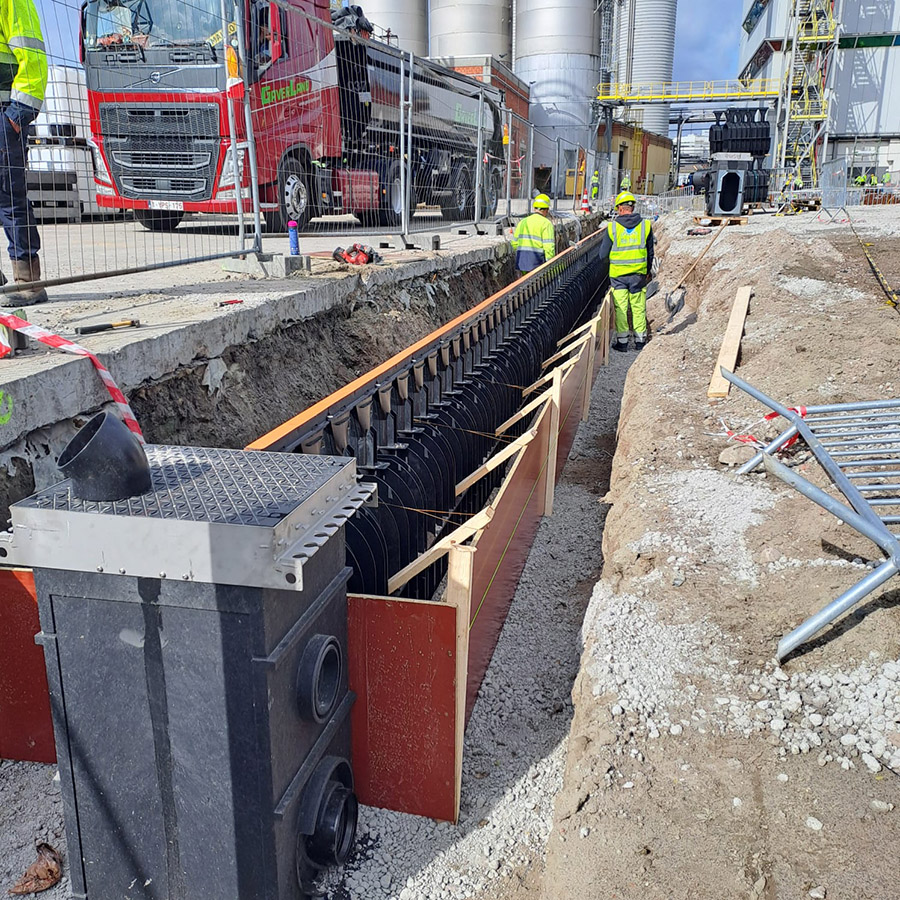
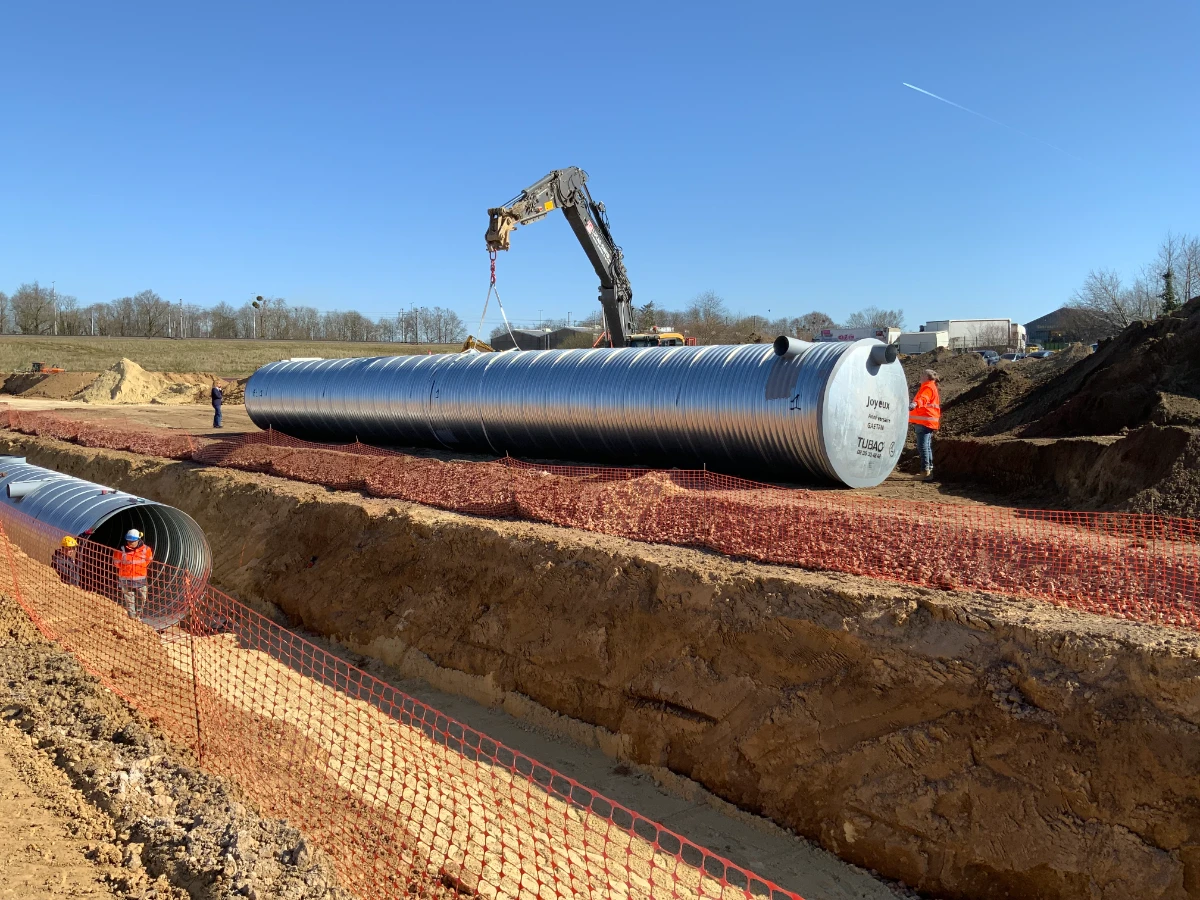
Doubeton’s new site combines various water management solutions. Some of the rainwater from the outdoor landscaping infiltrates directly through a wadi. Rainwater from the 8,000 m² roof area and other paved surfaces is collected and drained to an underground Tubao buffer.
With a capacity of no less than 2,100 m³ This system consists of 14 galvanized steel tanks with a diameter of 3 meters. The collected water is then given a second life on site: it is reused in the production process, including for the concrete plant and the sawing facility. Water quality was also taken into account in the design. Rainwater from the truck parking areas first passes through a hydrocarbon separator. During exceptionally heavy rainfall, the overflow from the buffer system is discharged by gravity into the wadi.
Added value starts with the plan
However, the greatest added value of this project lies not only in the products that were chosen. Our Research Department was involved in the project from an early stage and analyzed the entire project with a view to both technical and financial optimization.
For example, the ground levels were thoroughly studied. Due to the depth of the sewer system and the Tubao Tubes By optimizing this process, the volumes required for excavation and backfilling could be significantly reduced. For the contractor, this translates to significant savings on earthwork and soil removal.
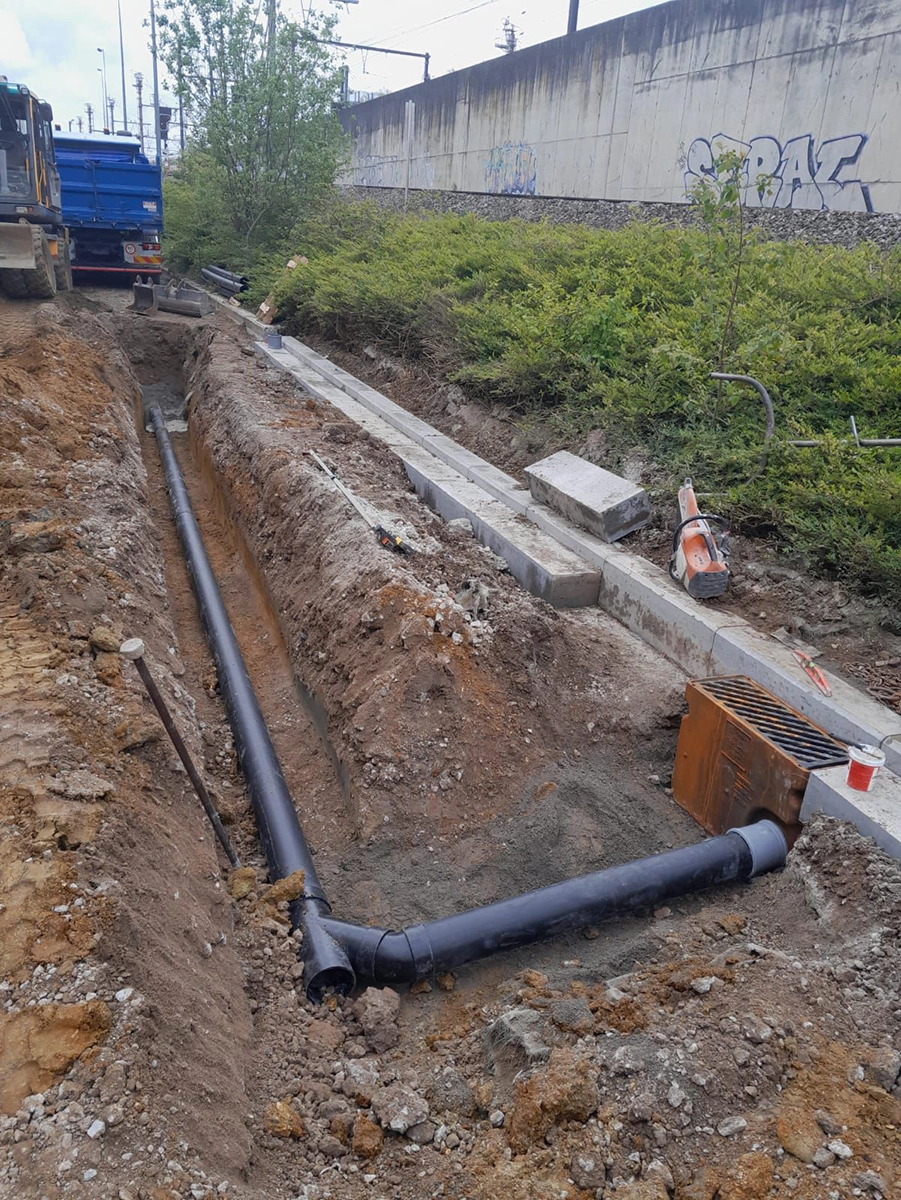
The entire stormwater and sewer network was also hydraulically analyzed and sized. This approach ensures reliable operation and optimal handling of peak flows. Subsequently, the entire network was developed using BIM, which made it possible to precisely coordinate the various structures, pipes, and technical systems.
Optimizing for Higher Returns
By proposing an optimized version and the Tubao Buffer System Because the system was fully reconfigurable, Deschacht was also able to significantly reduce the planned sewer network. Fewer pipes not only mean a more efficient use of materials, but also faster installation and less excavation work.
That’s exactly where our engineering department makes a difference. For architects and engineering firms, Deschacht is a technically strong partner that contributes ideas right from the design phase. For contractors, this means a concrete and feasible plan that allows them to optimize time, materials, and costs on the job site.
“We are very satisfied with our collaboration with Deschacht at the Doubeton construction site in Leuze. Thanks to true teamwork, we were able to develop a technical solution that meets the expectations of all parties involved. We also particularly appreciate the quick response and commitment throughout the entire project.”
Filip Covemaeker, C.T.O.
A major project starts with a thorough study. That’s why Deschacht looks beyond the product itself and seeks the solution that offers the best return—both technically and economically.