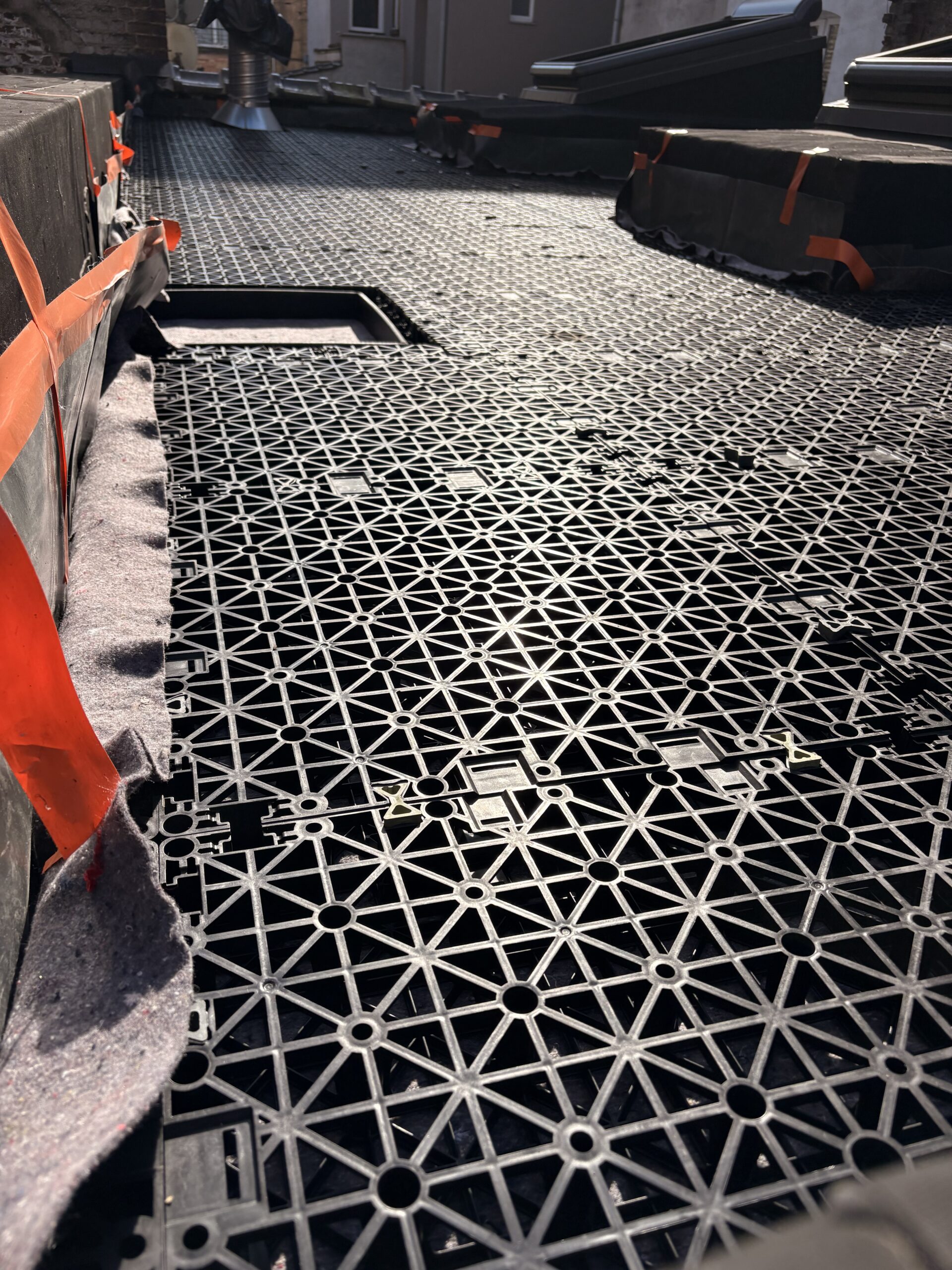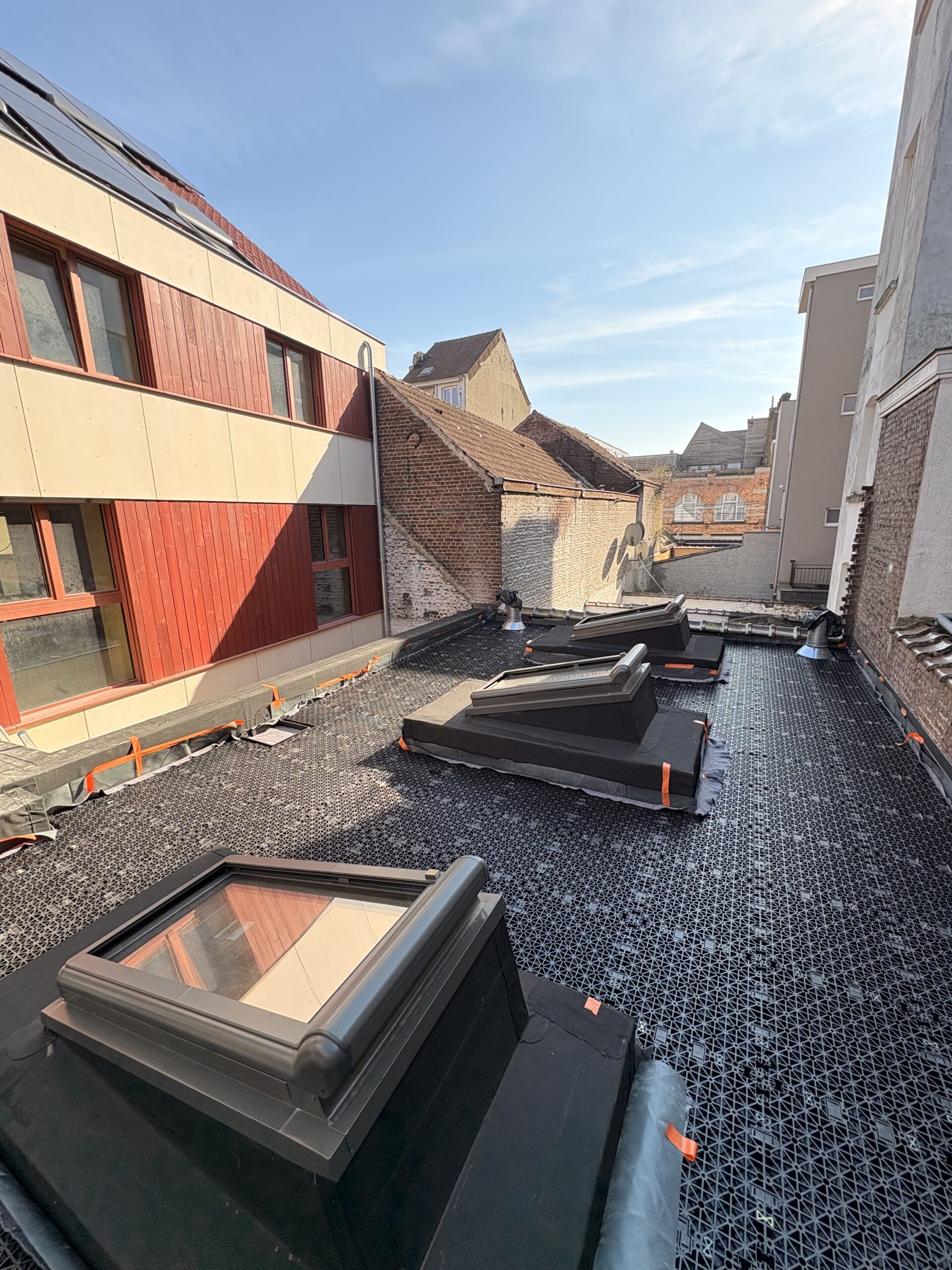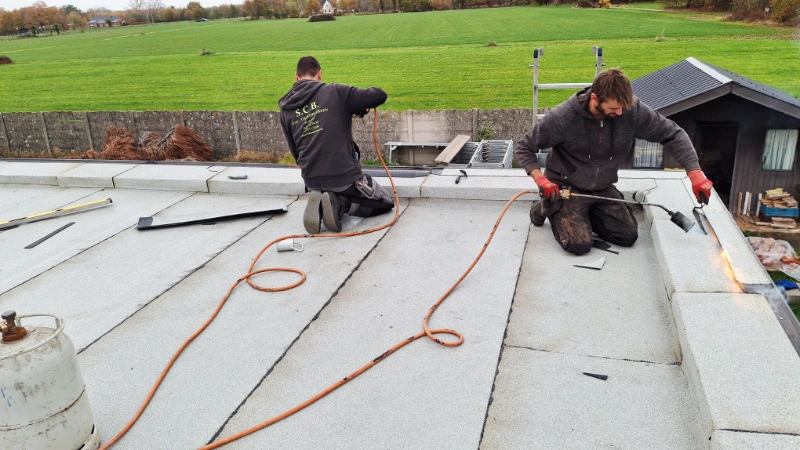
In densely populated urban environments, efficiently managing rainwater is becoming increasingly important. For a new construction project in Molenbeek, contractor BOUD is therefore implementing an innovative solution: a retention roof that collects and temporarily buffers rainwater. For this project, “De Brug,” Deschacht supplied the system that makes water management on the flat roof possible.
Roof water management
For the project, Deschacht supplied 134 retention boxes with all necessary accessories. Together, they provide a buffer volume of approximately 3,000 liters of rainwater on the flat roof of the building. A green roof will later be installed on top of the retention system. This creates a so-called blue-green roof (combi-roof). The principle is simple but effective: rainwater is first collected and temporarily buffered in the retention boxes, after which it is discharged at a delayed rate. In this way, the water is not immediately sent to the sewer system, but released in a controlled manner.
Solution for urban projects
In urban areas, space for traditional retention basins or infiltration facilities is often limited. A retention roof offers an interesting alternative here because water management takes place on the roof itself. This has several advantages:
- reduction of peak load on the sewage system
- temporary rainwater retention
- controlled and delayed discharge
- combination with green roofs for extra water absorption and cooling
This method of water buffering is still far from common practice in private construction projects. Yet, in an urban context, a retention roof can be a very efficient solution for collecting rainwater locally.
In line with the Flemish rainwater policy
Furthermore, the installation of retention roofs fits in perfectly with the
rainwater policy of the Flemish government.
New construction and renovation projects must increasingly focus on local retention, reuse, and infiltration of rainwater, as stipulated in the recent rainwater ordinance. By temporarily retaining water on the roof and discharging it at a controlled rate, this type of system helps prevent sewer system overloads during heavy rain, keeps rainwater locally available longer, and mitigates urban flooding. With this project in Molenbeek, BOUD demonstrates how innovative roof solutions can contribute to sustainable water management even in urban environments.