Case study: Everything you need to know about storm basins
Storm basins have more than adequately proven their usefulness in the past. The temporary storage of rainwater originating from the ground and/or roofs and the potential buffering of exceptionally large volumes of water during heavy rainfall make it possible to limit the risks of flooding and the saturation of the sewerage network. The guidelines for rainwater runoff are cast in a legislative framework that is slightly more decisive and detailed in the Brussels-Capital Region than in Flanders and Wallonia. In Belgium, open space is paved over every day as a result of ever-advancing urbanization (over the past thirty years, this has amounted to a staggering total of 1,400 km², or 46 km² per year). Logically, this creates problems regarding rainwater drainage. Fortunately, various products (such as water-permeable paving) and techniques exist that mitigate the damage to some extent. They prevent flooding and relieve the burden on the sewer system, which, despite regular inspection and periodic maintenance work, is not always able to collect and process large amounts of rainwater – especially during heavy downpours or severe thunderstorms.
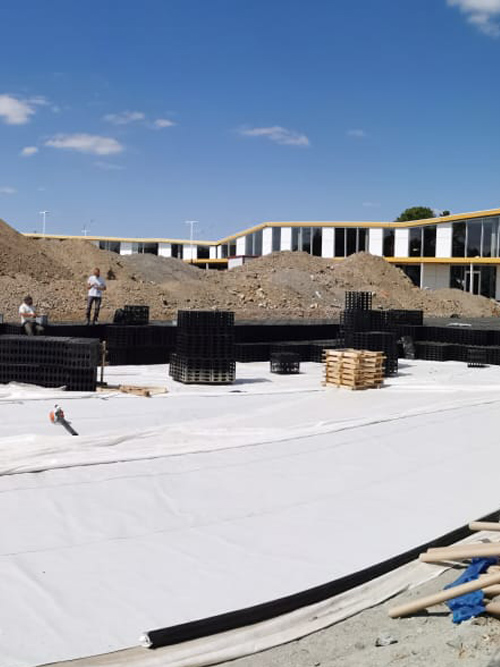
Buffer or infiltration basins
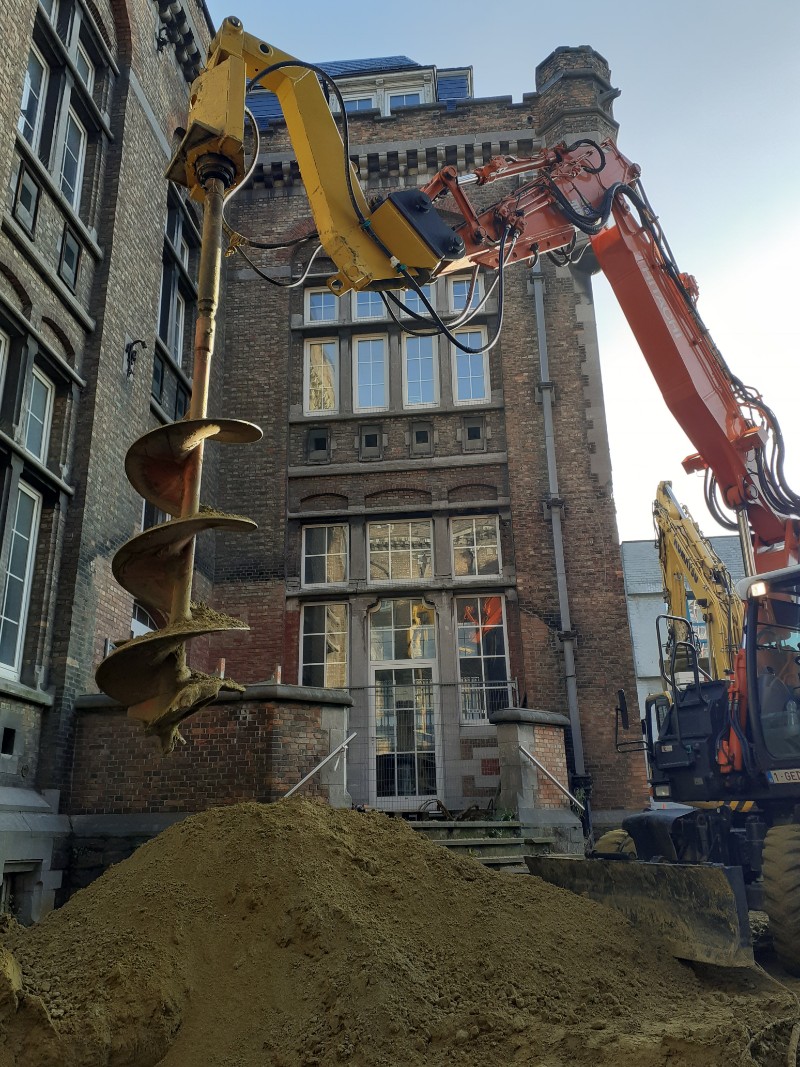
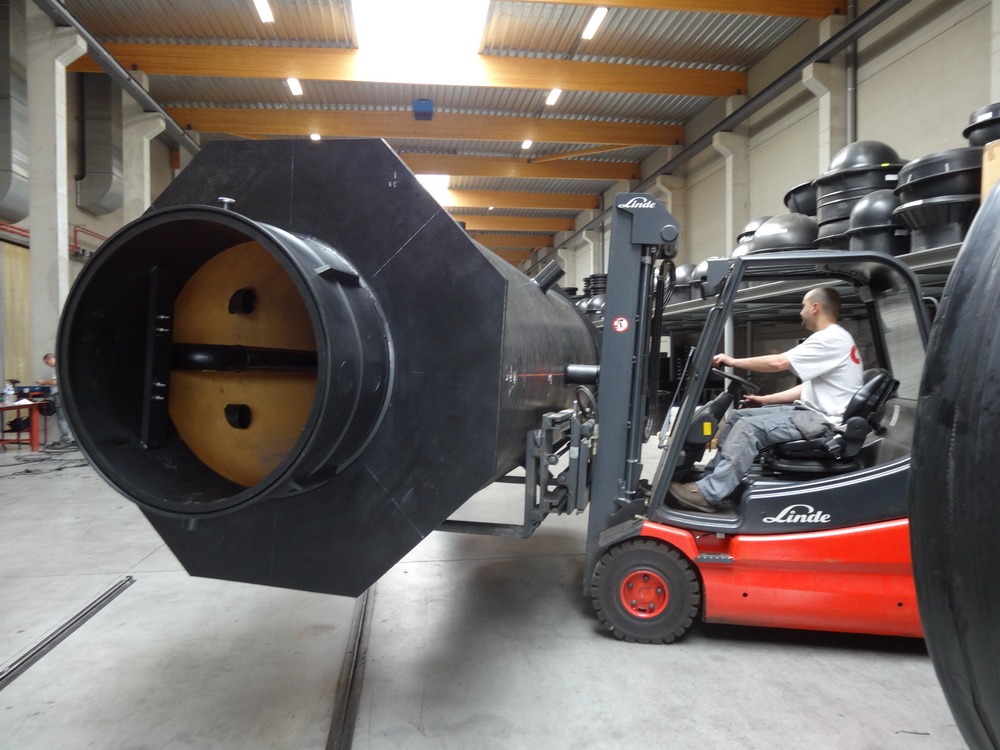
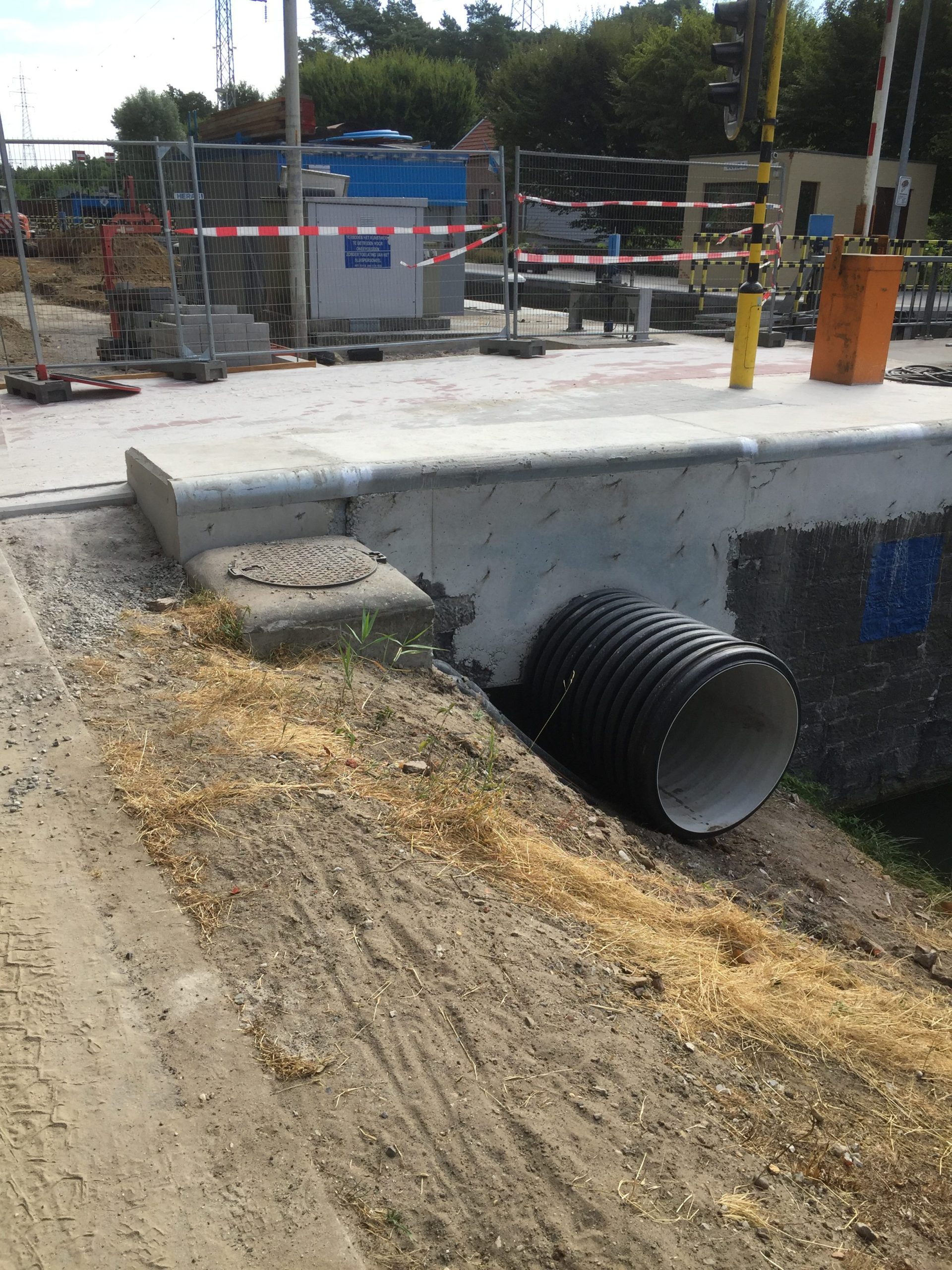
Storm basins provide a simple and efficient solution for collecting rainwater that ends up in large quantities on roads or building roofs. There are two types: attenuation basins and infiltration basins. Attenuation basins collect rainwater for later (re)use. For example, in many single-family homes and apartment buildings, it is used for flushing toilets. Infiltration basins ensure that the collected rainwater drains into the soil, a pond, a stream, a drainage gutter, or the sewage system, either at a delayed rate or not. They are often used in large construction projects (new housing developments, shopping centers, etc.).
Flanders and Wallonia on the same wavelength
A lot has already been said and written about the differences between Flanders and Wallonia. Yet, both regions are on the same wavelength regarding legislation on rainwater drainage. Both for single-family homes and apartment buildings, they place the emphasis on infiltration. In the case of larger developments, soils with insufficient water permeability, or projects where water recovery is an integral part of the design, cities and municipalities tend to opt for retention basins. Since January 1, 2014, Flanders has been bound by the guidelines in the Regional Urban Development Regulation on Rainwater. Furthermore, the installation of an infiltration basin in the public space must comply with the regulations in the Code of Good Practice for the Design, Construction, and Maintenance of Sewerage Systems (August 2012), drawn up by the Coordination Committee for Integrated Water Policy (CIW). In Wallonia, since January 1, 2017, rainwater drainage must be taken into account in the realization of any new construction project in densely populated areas or zones with economic activity. If infiltration into the soil is not possible (for example, for technical reasons), discharge via an artificial gutter or to a pond or stream is chosen. If even the latter is not possible, the rainwater can still be discharged into the sewerage system. In any case, it is useful to test in advance whether the soil is water-permeable and to what extent it can absorb certain quantities of water.

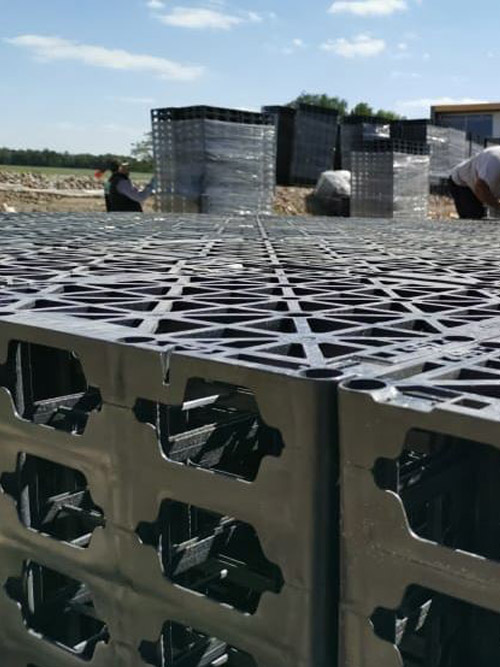
Detailed legal provisions in Brussels
In Brussels, the installation, operation, and management of storm basins with a rainwater storage capacity of more than 10 m³ are regulated by the Government Decree of May 23, 2019 (in certain municipalities potentially further supplemented by a Municipal Urban Development Regulation that formulates some more specific guidelines). To summarize briefly, the government decree provides a detailed specification of the installation conditions for storm basins – regardless of whether they are used for retention or infiltration – and their required equipment: a specific inspection chamber at the outlet of the structure, a flow control system, a pump chamber at the lowest point (for cleaning), a ventilation opening, an alarm system that signals any problems or defects in the emptying process, etc. Basins with a capacity of 25 m³ or more must be equipped with an electrical connection and a device for telemetry or remote monitoring. Finally, the government decree defines the conditions for the commissioning, maintenance, and periodic inspection of storm basins.