Case study: Deschacht integrates VMSW coding into its own BIM library
Inspiring collaboration between Woema, C3A and Deschacht
The use of Building Information Modelling – Building Information Model in Dutch – is becoming increasingly popular among construction professionals. One of the reasons for this is that 3D BIM models guarantee the correct execution of the design, installation plan, specifications, and cost calculation. The Ghent-based timber construction company Woema asked Deschacht to process the VMSW coding in its BIM library. We asked Nils Detemmerman, BIM coordinator and director at Woema, and Filip Roels, BIM Engineer at Deschacht, how this collaboration came about.
More and more customers are using the BIM library that Deschacht – led by Filip Roels – has put together so far. “This library fits into our strategy to become a to offer full service to architects and engineering firms, among others, including our own engineering department. As BIM has also gained considerable importance within the construction sector in recent years, developing a digital library was also a logical step for Deschacht.” Deschacht's BIM library is distinguished on the one hand by its brand loyalty. Components that we do not sell ourselves can also be integrated into the BIM model. After all, we want a complete drainage plan to be able to be designed, including catch pits or septic tanks, oil and petrol separators, and all possible pipes and fittings. On the other hand, our solution makes it possible to draw correctly. However, the BIM platform has a certain corrective intelligence. The library itself indicates when custom work is chosen in the design. This way, the draftsman can still decide to choose such custom work or adjust the design.”
BIM working method: wide range of benefits
“The use of BIM offers users numerous advantages,” Filip indicates. “You can draw projects down to the smallest detail, allowing you to quickly detect and solve any problems with clash detection. In addition, you can also include the data from the drawings in your quote, order confirmation, and invoice. Thanks to the same ‘item codes’ representing items as determined by the VMSW, site managers can easily perform a post-calculation afterward. And compared to generic libraries, you always have the certainty that you are making drawings with components in the correct dimensions that are legally permitted and available on the market. This avoids unpleasant surprises during construction or infrastructure projects.”
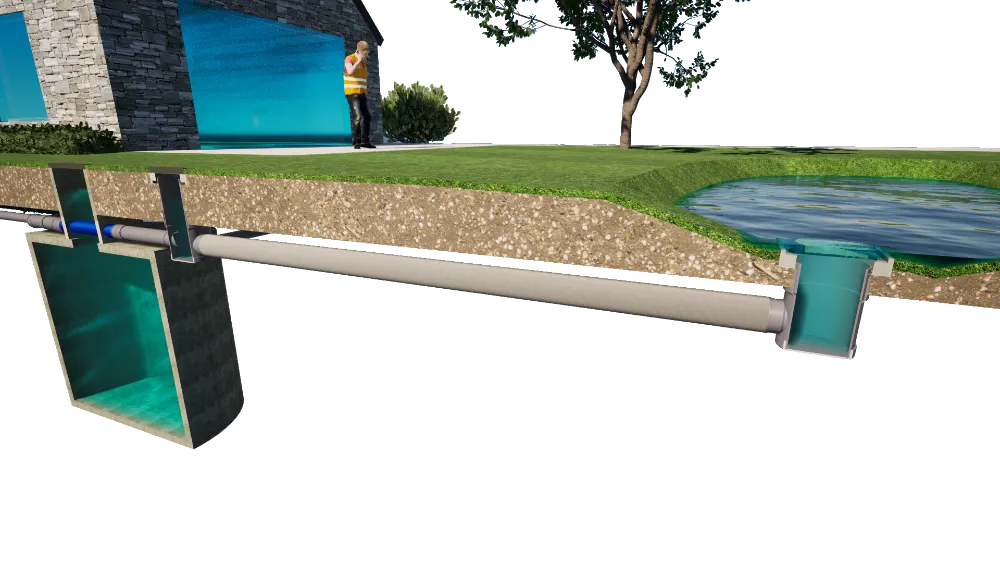
VMSW coding in Deschacht BIM library
Completing the BIM library and making it as intelligent as possible is a major challenge for Filip and his Deschacht colleagues. Collaboration with external parties is an important avenue in this regard. Woema is a Ghent-based timber construction company that strongly believes in the BIM working method. Martijn Batavia, BIM modeler at this construction partner, approached Deschacht with the request to process the VMSW coding into the BIM library. “This coding from the Flanders Social Housing Company involves the standardization of items required for the construction of homes,” says Nils Detemmerman of Woema. “In practice, about eight out of ten architects use this coding. The VMSW codes and linked components deserve a clear and user-friendly search structure for construction professionals. Deschacht has helped us tremendously with this.” Filip adds: “The first test version of our BIM library, which already incorporated several VMSW codes, was a great success with our customers. At the request of Martijn and Nils, we got to work on significantly expanding and updating this coding in our digital library. This enabled the Woema team to use the specification and bill of quantities extraction from Ghent software suppliers C3A and GeoIT. These tools are compatible with our library.”

Inspiring love triangle
Thanks to the collaboration between the construction company, software vendor, and supplier—Woema, C3A, and Deschacht, respectively—a synergy with major added value was created. “We worked exceptionally well with Filip and his colleagues,” Nils looks back. “They regularly consulted with us on how to improve this operation, making practical agreements on how the coding could be efficiently expanded. After all, as a contractor, we want to maintain the necessary flexibility during the preparation of construction projects, while Deschacht, as a building materials supplier, wants to be able to work in sufficient detail. With Filip as the Single Point of Contact at Deschacht, we were able to brainstorm directly with an expert developer, without unnecessary intermediaries.” “This new collaborative process was extremely educational for me as a BIM expert,” Filip adds. “A client like Woema provides us with a lot of valuable information to build our BIM library in a clearly structured way. Moreover, Woema’s request to add the VMSW coding was a new way of collaborating for us. Often, construction partners are somewhat reluctant about BIM collaboration out of fear of having to commit to the supplier. That is not the case here at all. Together with Woema and C3A, we hope to take additional steps in terms of collaboration in the future.”