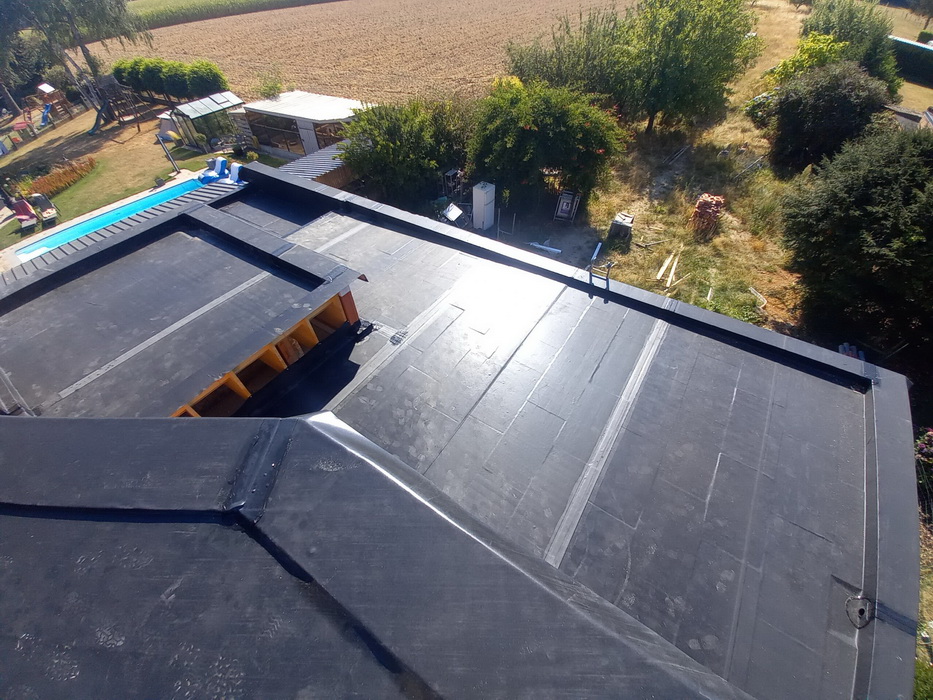
Aquafin is building a brand-new wastewater treatment plant in Aartselaar. For the first time, the plant will also remove micropollutants from the water. A first for Flanders. Deschacht’s HDPE pipes transport the purified water between the various structures within the plant.
Flanders needs a full-scale facility for micropollutant removal. This is to gain experience with various techniques for the removal of hazardous substances. Three technologies will be tested on a full-scale for the first time on the effluent of a wastewater treatment plant. “In this way, Aquafin wants to get a feel for these new techniques and investigate how they can be integrated into our wastewater treatments,” says Jan Dickens, project manager at Mols.
What is micropollutant removal?
Micropollutant removal consists of three technologies: disc filters, ozone, and granular activated carbon (GAC). The disc filters pretreat the WWTP effluent flowing to the micropollutant removal facility so that almost no suspended solids pass through to the rest of the post-treatment. “The lower the suspended solids concentration flowing to the downstream purification, the higher the efficiency of the subsequent treatment techniques,” says Willy De Schagt of Deschacht. The facility consists of an ozone installation, followed by pressure filters with granular activated carbon. Two ozone generators produce the ozone gas on-site, which is introduced into the wastewater via ceramic diffusers. “Ozone partially breaks down the micropollutants. Afterward, all the water flows from the ozone reactor tank to six pressure filters. The activated carbon will absorb both micropollutants and breakdown products in its pores,” says Willy. “By combining both techniques, micropollutants can be removed as efficiently and completely as possible from the WWTP effluent. Approximately 75% of the discharged water from Aartselaar WWTP will be treated by the micropollutant removal.”
Need for new technique
Thanks to the project in Aartselaar, Aquafin is learning which micropollutants we can use as indicator substances and which techniques are useful for monitoring effluent quality and the health of the watercourse in the long term. In addition, the effluent discharge from the Aartselaar WWTP makes up a large share of the flow rate of the receiving watercourse. “The reduction of discharged micropollutants and the impact of this on water quality should therefore be significant and clearly traceable. We can use these results as a guideline to decide where other micropollutant removal facilities will be most cost-effective,” Jan explains.
HDPE pipes from Deschacht
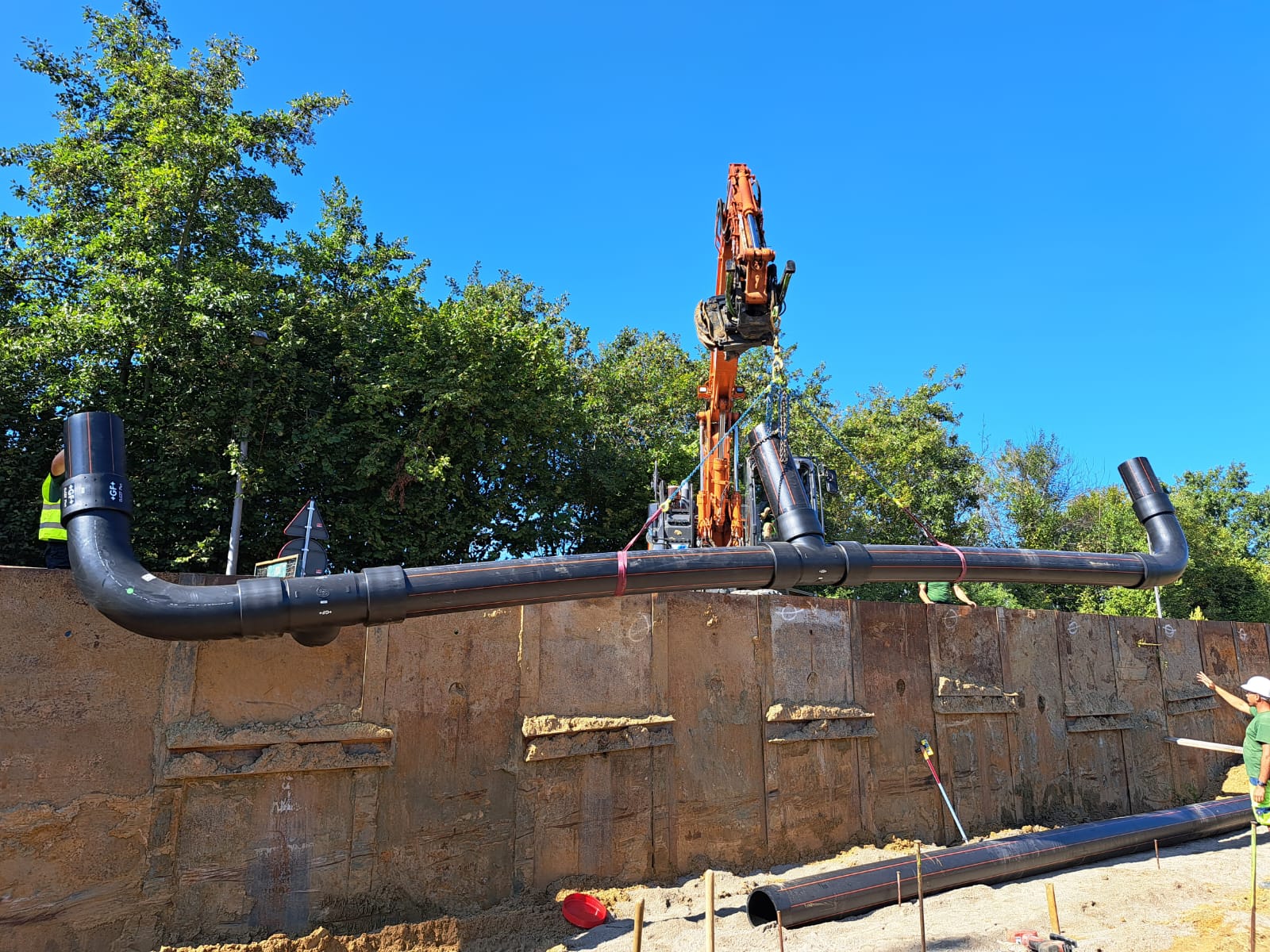
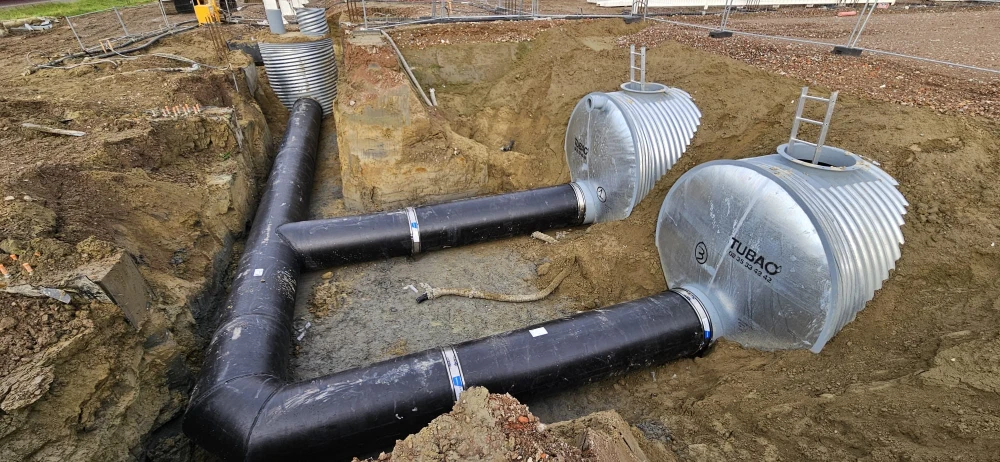
The HDPE pipes from Deschacht play an important role in this project. Specifically, they transport the water to be treated between the various structures, either by pumping or by gravity flow. “The site is only 1,500 m². It is a challenge to get the entire installation fitted onto it. But Deschacht's engineering department reworked the basic plan from the design firm into an implementation plan, allowing us to rely on a well-prepared and detailed layout. The installation is therefore going very smoothly,” Willy concludes.
Technical data sheet
+/- 100 own employees
civil engineering / road construction / sewer renovation works / slipform construction works / concrete and crushing plant
Services for this project:
concrete works – civil engineering – construction of sewerage and process piping – road construction and finishing