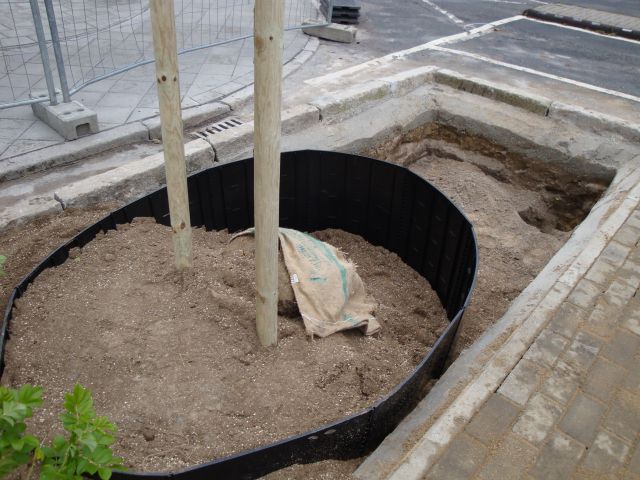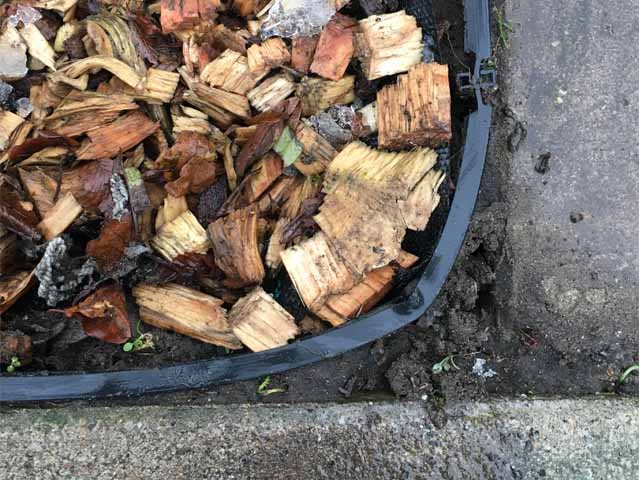
Protect infrastructure and give tree roots the right growth direction
In urban environments, tree roots often cause damage to pavement, sewers, and utility lines. Due to limited space, roots grow shallowly and make their way toward the infrastructure. With root guidance and root barriers, you direct this growth in a controlled manner and prevent long-term damage.
By directionally guiding or locally blocking roots, you create a sustainable balance between healthy tree development and a stable subgrade. This is essential in projects where urban greening and infrastructure intersect.
Difference between root guide and root barrier
The choice between root guidance and root barrier depends on the available space and the goal of your project. Both systems prevent damage, but work in a different way.
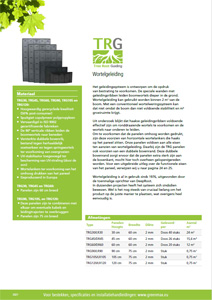
bone conduction
- leads roots downwards via vertical ribs
- prevents paving from shifting upward
- provides better stability for the tree
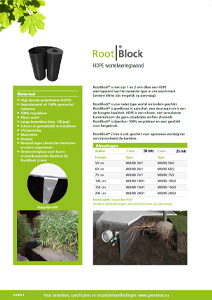
Root barrier
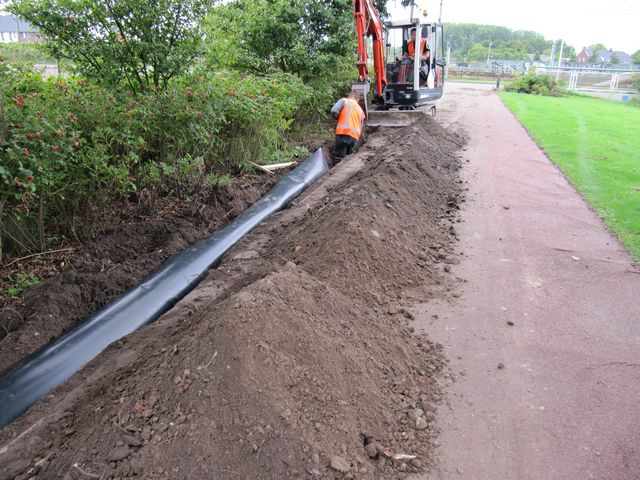
- creates a root-free zone
- protects utility lines and infrastructure
- is applied at a greater distance from the tree
By choosing the right system, you prevent expensive repairs and increase the lifespan of both the tree and the infrastructure.
Technical advice on root growth systems?
Avoiding root problems in your design?
Get guidance on the right choice and installation of root barriers or root deflectors.
Applications within infrastructure and public space
Root barriers and root guides are used in projects where trees may conflict with paving or underground infrastructure. Especially in an urban context, they are an indispensable link in sustainable design.
Typical applications:
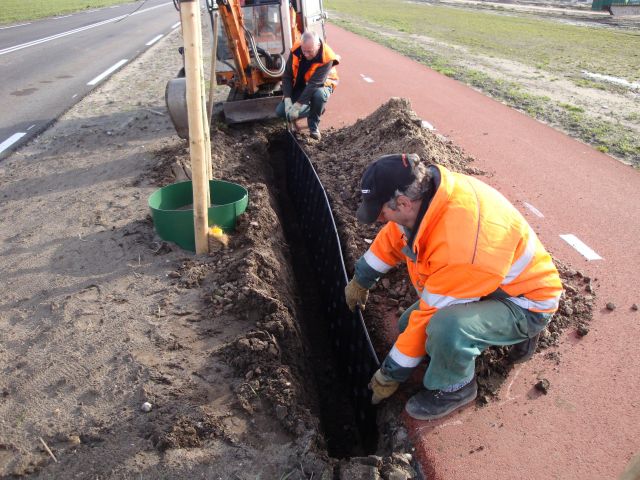
- footpaths, roads and cycle paths
- squares and public space
- protection of cables and pipes
- urban greening projects
By taking these systems into account as early as the design phase, you are building a low-maintenance and safe environment.
Reliable long-term operation
A correctly installed system ensures that roots develop without causing damage to their surroundings. Root guidance panels direct young roots to deeper layers, while barrier systems keep zones free from root growth.
In concrete terms, this means:
- less damage to paving and infrastructure
- better rooting and growth of trees
- lower maintenance and repair costs
- sustainable integration of greenery in urban projects
FAQ
1. When do you choose root conduction?
When the tree is close to paving and stability is required, root guiding directs roots to deeper layers without limiting growth.
2. When do you use root barriers?
For the protection of pipes and infrastructure where a root-free zone is required, at a sufficient distance from the tree.
3. How do ground protection mats prevent damage to paving?
The ribs guide roots vertically downwards, avoiding superficial growth and the lifting of paving.
4. What is the impact on the stability of the tree?
Guidance ensures deeper root development, which improves the anchorage and stability of the tree.
5. How do you determine the correct placement of a system?
This depends on the distance to the tree, the available growing space, and the presence of infrastructure. Correct positioning is essential for proper functioning.