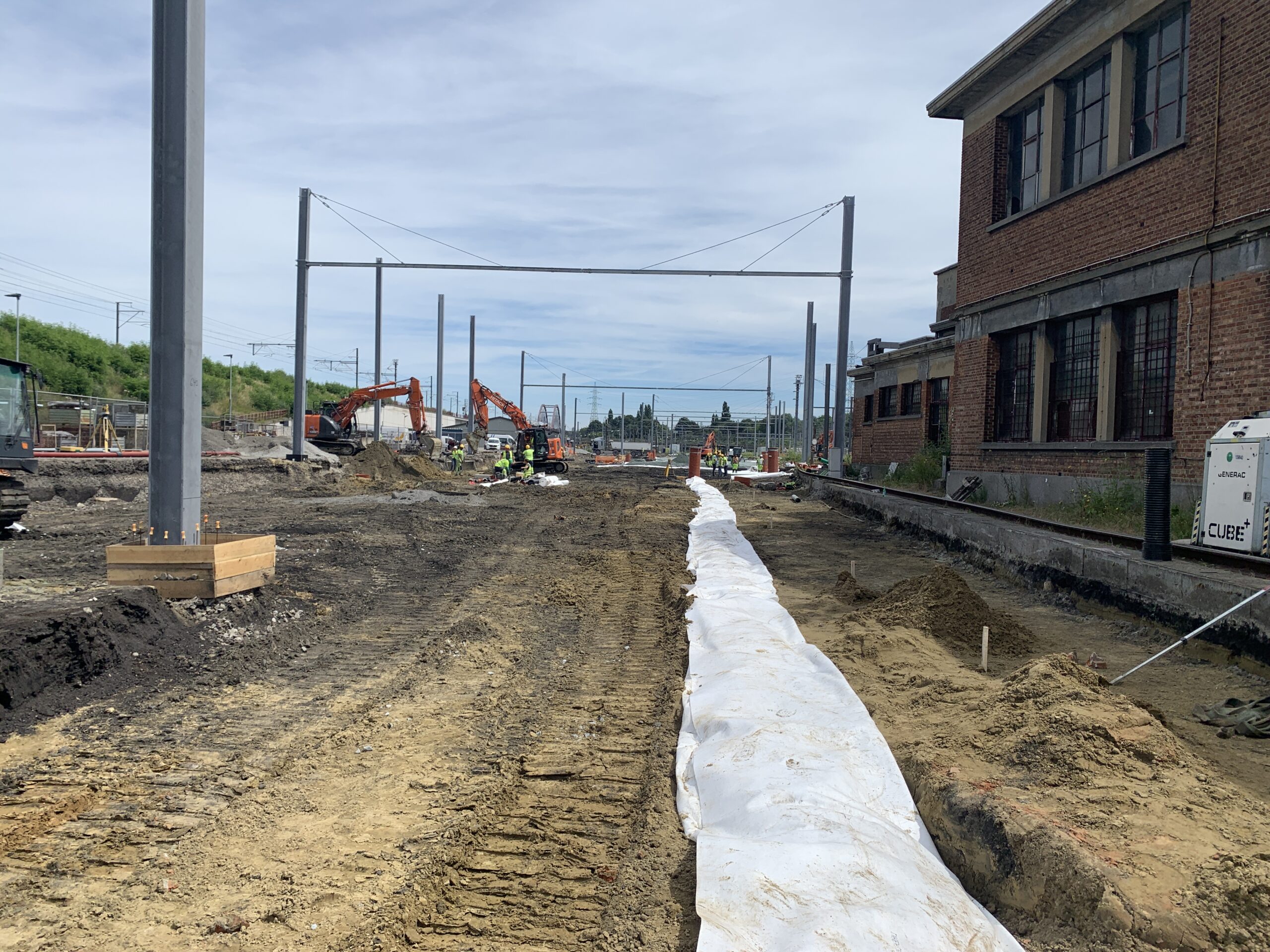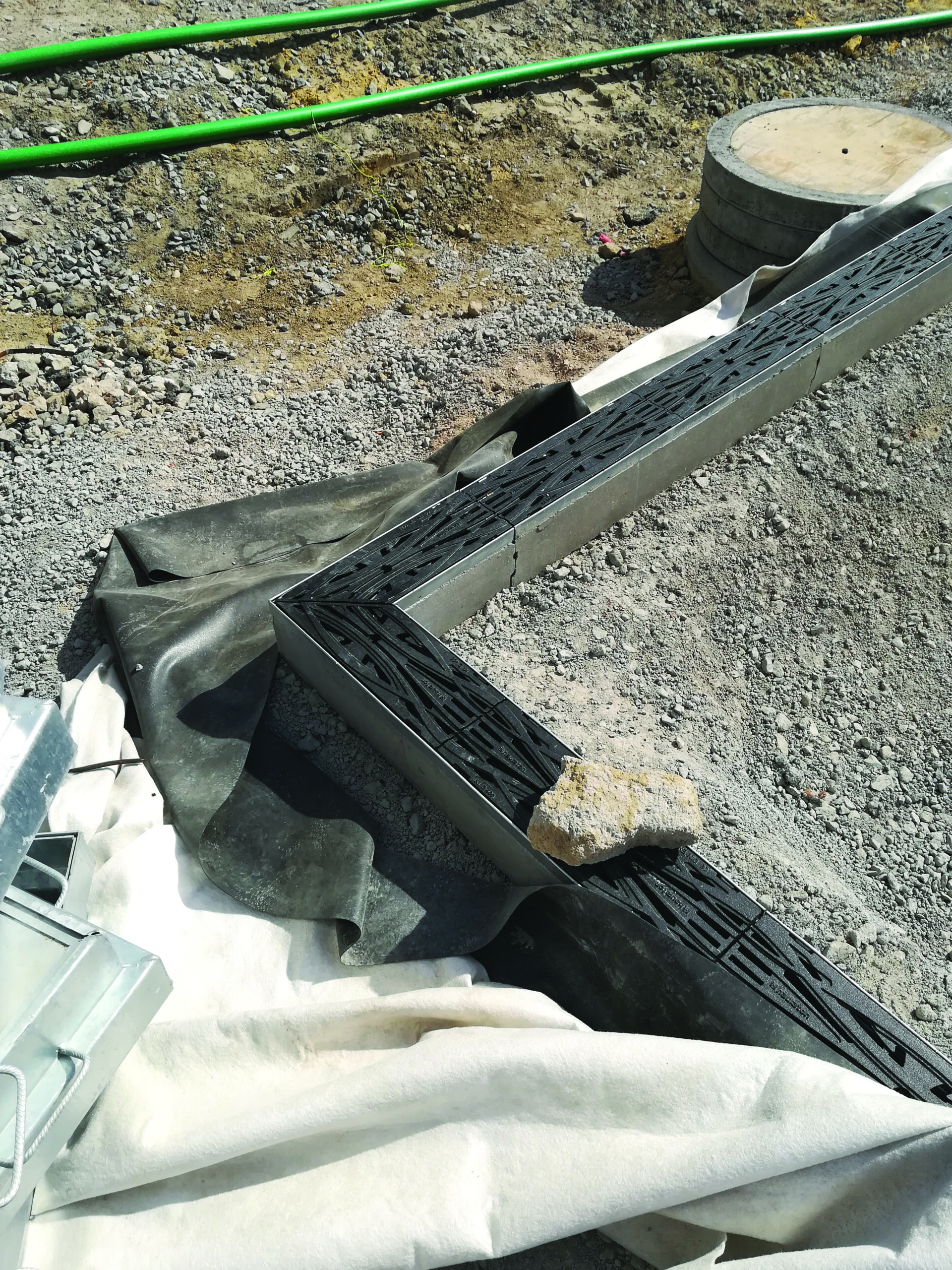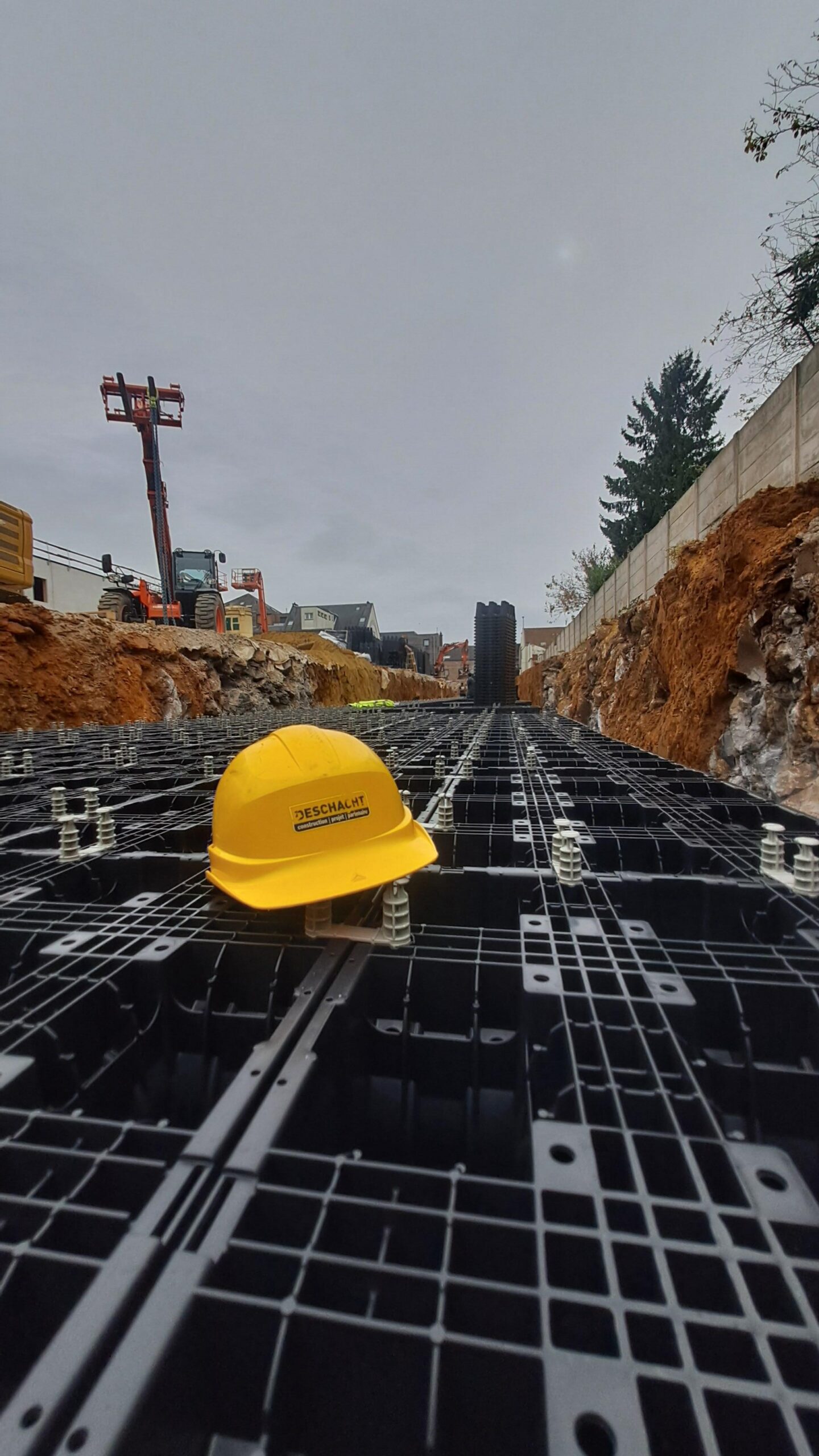
Centrum West in Mol is currently undergoing a metamorphosis. DCA Infra is installing a new sewage system there and renewing the entire road infrastructure. Rainwater reuse is an important part of the adaptation works. Deschacht is supplying nearly 200 vertical infiltration pipes for this project from its branch in Geel. The works are taking place in several phases. Phase 1, the earthworks, started in October 2022, with final completion scheduled for the end of 2023.
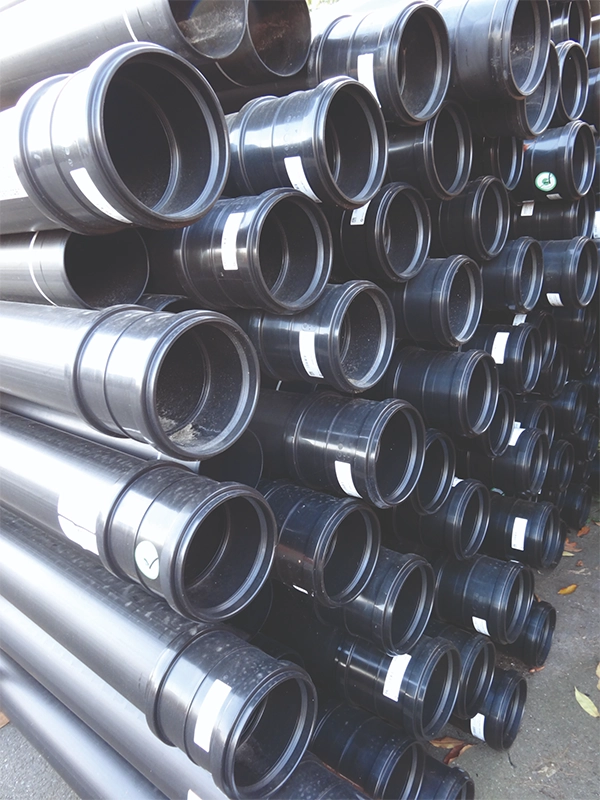
Sustainable construction, remodeling, and redevelopment also matter in large infrastructure works like this one. That is why the municipality of Mol is having the sewage system and road infrastructure in Centrum West revamped. Rainwater recovery through infiltration must give the municipal center a more ecological character. “The rainwater sewer system consists for 90% of infiltrating porous pipes,” says Kris Aerts, project manager at contractor DCA Infra. “In addition, we are placing nearly 200 vertical infiltration pipes of 6 meters that we are connecting to the street gullies.”
Maintaining groundwater levels
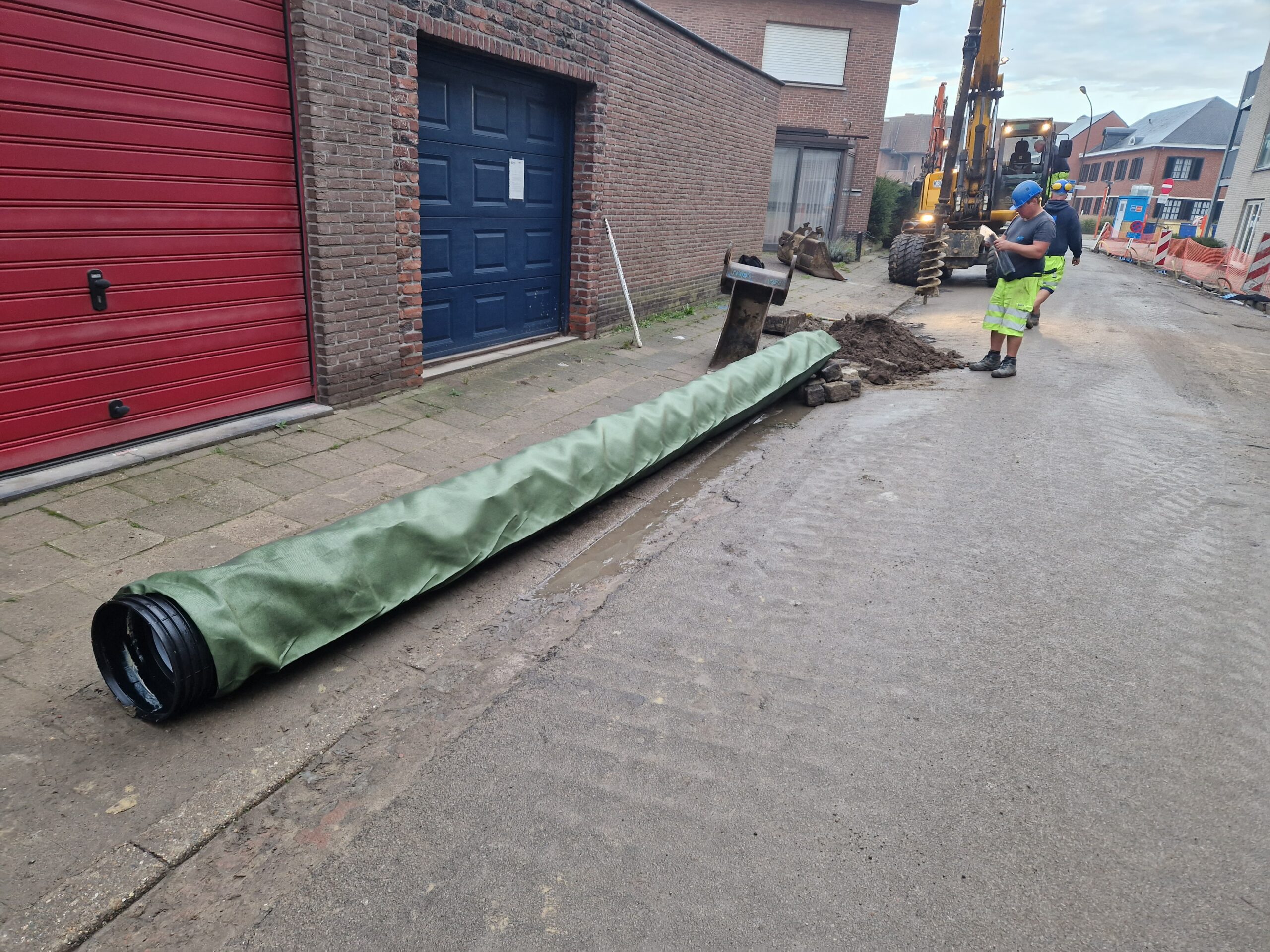
Rainwater that ends up in the gullies then flows into the vertical infiltration pipe, allowing it to seep back into the soil. The goal? To limit flooding and maintain groundwater levels. “The pipes have a length of 6 meters and a diameter of 30 centimeters,” explains Sven De Geyter, commercial employee for sewerage and drainage at Deschacht. “They are perforated polypropylene pipes, wrapped in geotextile and fitted with a plug at the bottom. At the top of the pipe, there is a rubber connection to make the connection to the gully using plastic pipes.”
First for the contractor
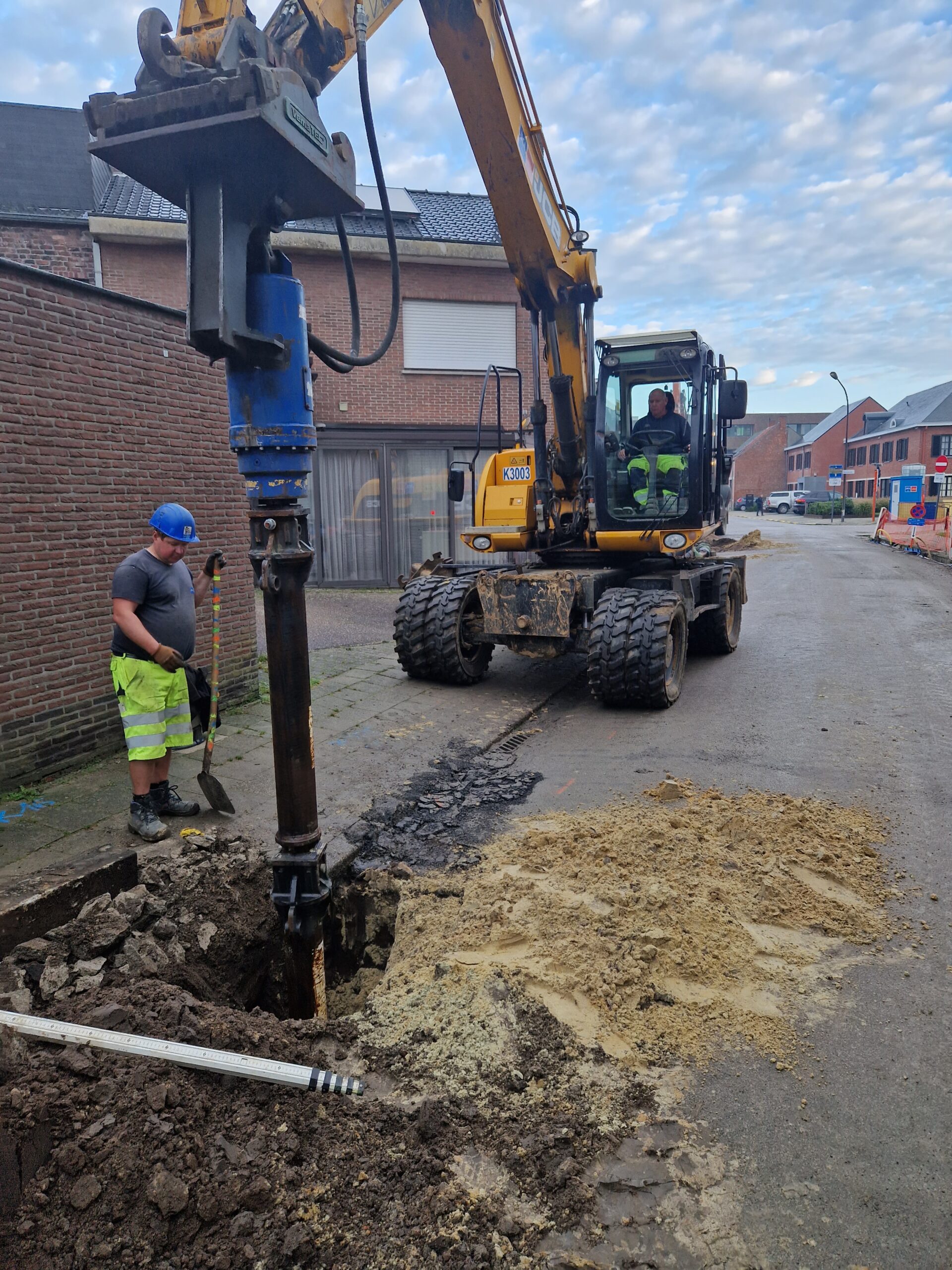
DCA Infra did not have any experience yet with the installation of a vertical infiltration system. Kris Aerts: “In the Netherlands, it is used much more compared to Belgium. We ourselves had not worked with this type of infiltration yet. The employees of Deschacht assisted us with both advice and the necessary material knowledge.” DCA Infra also sought advice from a drilling company. “The challenge was to drill a sufficiently large hole between the various utility lines and sewerage located beneath the road surface without compromising stability in any way. Ultimately, drilling with an auger in combination with wellpoint dewatering proved to deliver the desired result,” explains Kris Aerts. “As soon as the borehole meets the requirements, we install the vertical infiltration pipe, which we then surround with draining gravel. In addition to the connection to the gully, we also provide an overflow made of infiltrating pipes that we connect to the stormwater main sewer.”



DCA Infra
DCA Infra wants to be a reliable partner that offers a suitable tailor-made solution for every request — from large public sewer projects to the construction of private parking lots.