Complete reconstruction of the drainage network of the Eco Terres sorting center
In Farciennes, the site of Eco Terres, part of the DEME Environnemental group, plays a key role in the remediation and recycling of soil. As an important link in the circular economy, the site receives and stores contaminated soil on large impermeable hard surfaces. But this essential site for the region faced a major problem: recurring flooding.
The complete impermeability of the pavements prevents rainwater from infiltrating the ground. The water collects and flows into the existing drainage network, which quickly becomes saturated and clogged with suspended particles. The result: repeated blockages and flooding at the site. Under the impetus of Grégoire Dossin, site manager, Eco Terres therefore launched an ambitious project: completely renovating the drainage network.
A new hydraulic structure
Patrick Glorieux from our study department took on the study and dimensioning of the new sewer network.
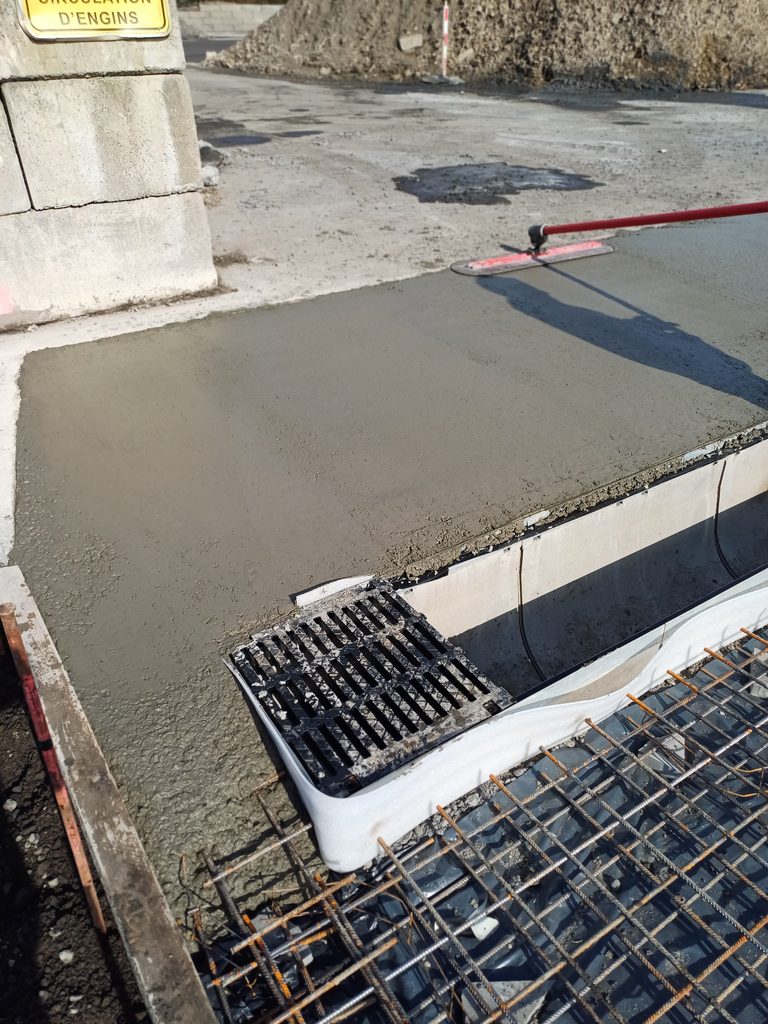
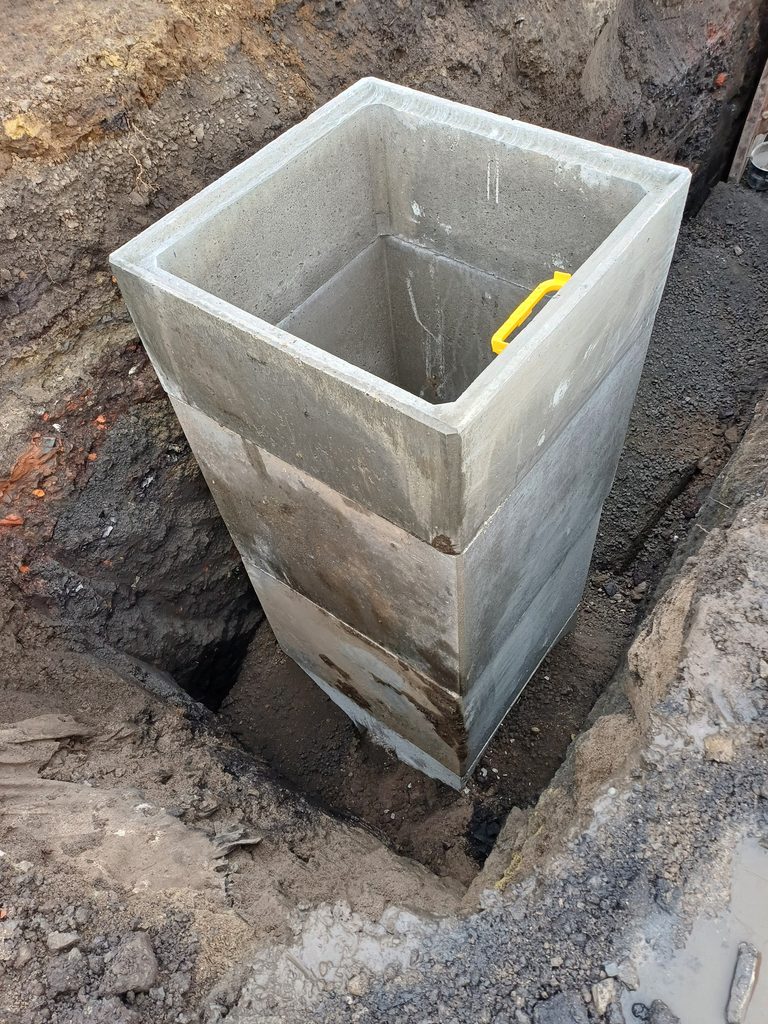
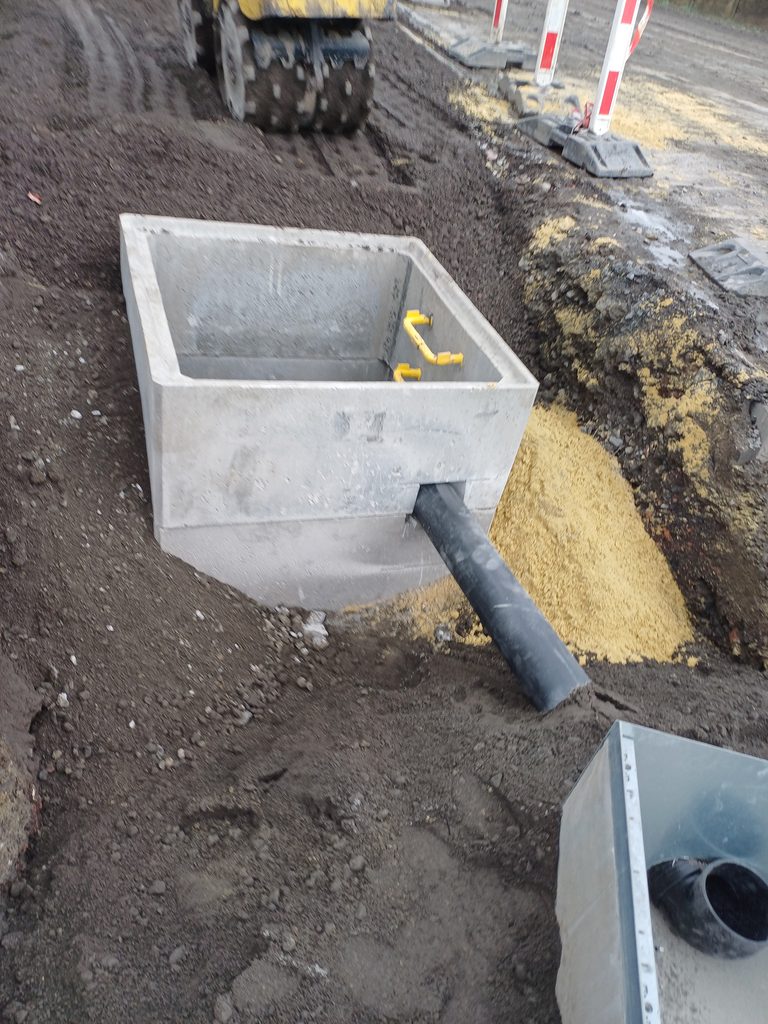
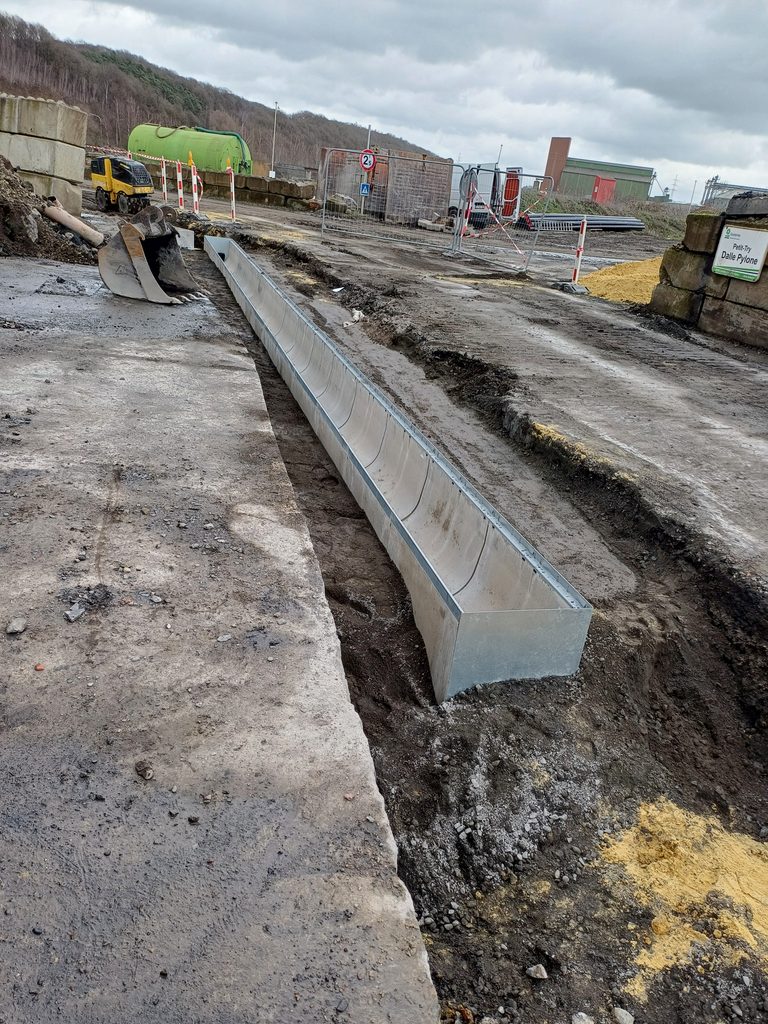
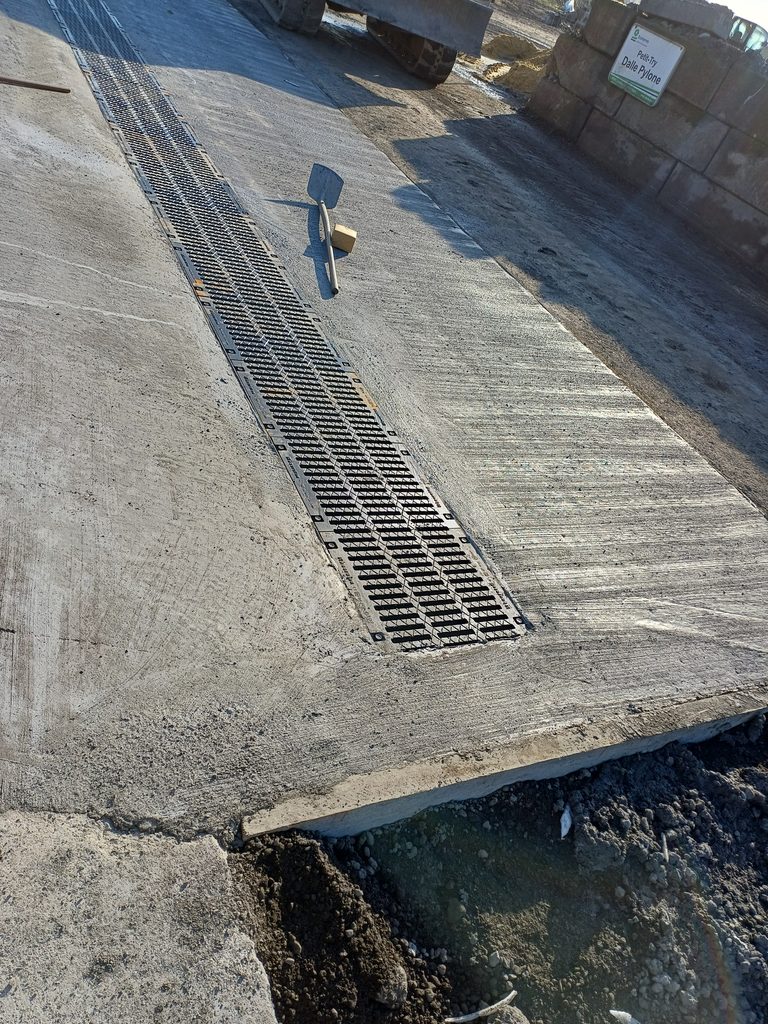
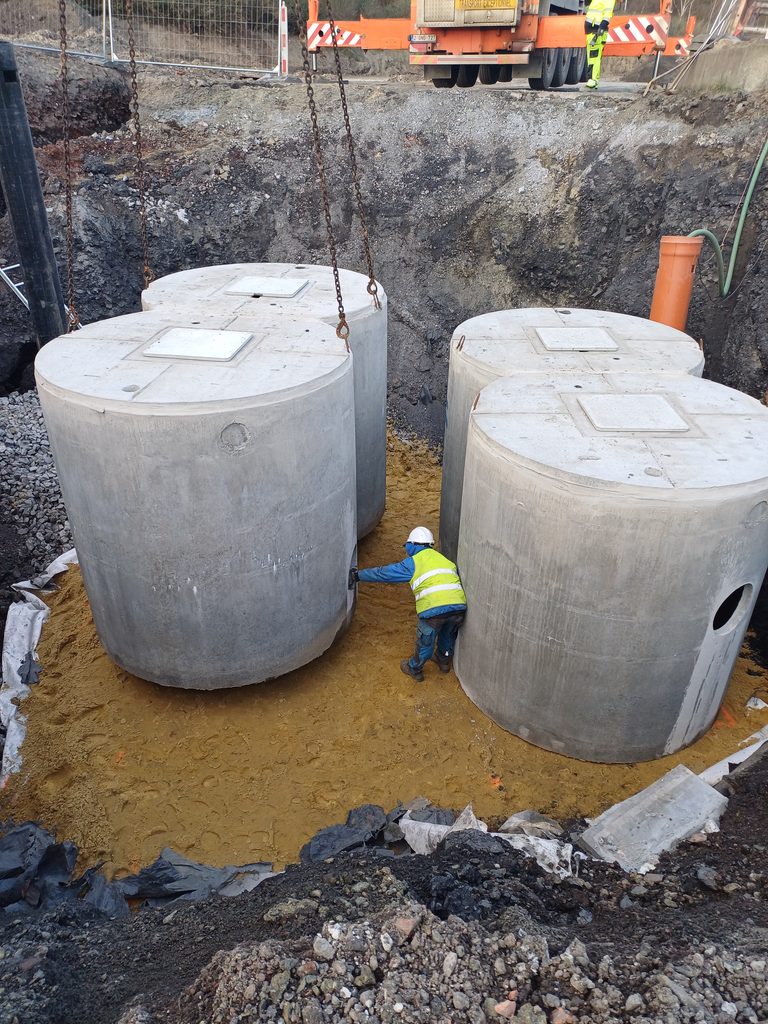
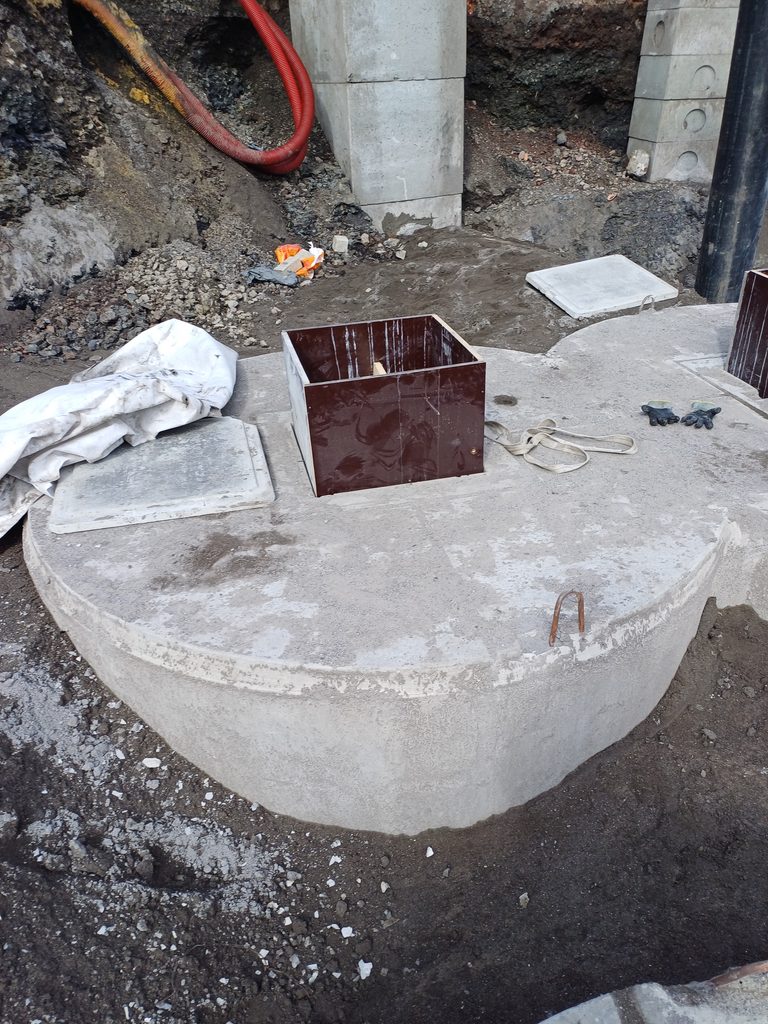
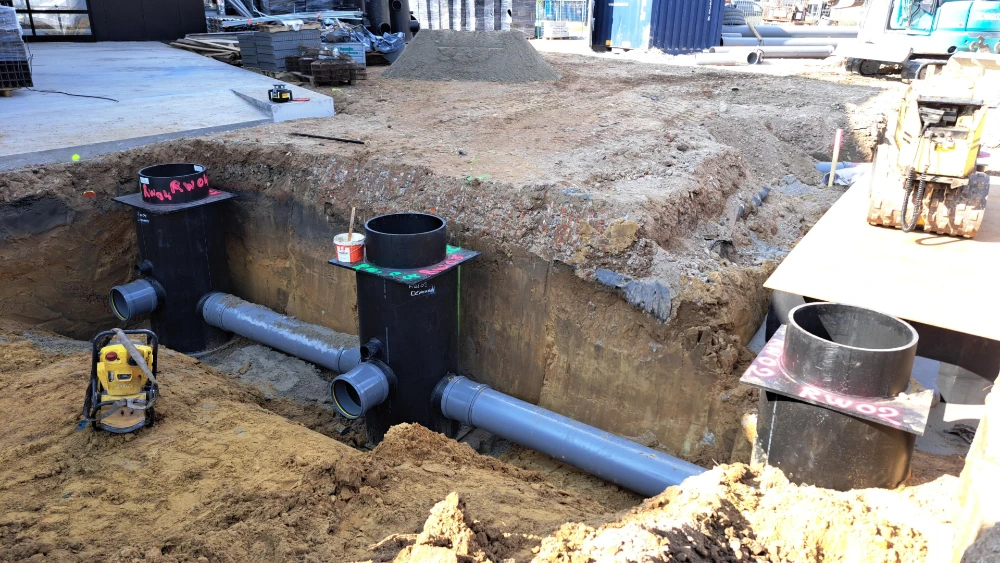
The hardscaping, the heart of the storage operations, formed the starting point of the project. Three separate zones were defined, each equipped with its own collection and pumping system. The rainwater is now collected via Super 500 gutter profiles (36 m, equipped with cast-iron grates of class E600 that are resistant to heavy equipment) and impressive-sized reinforced concrete wells (up to 120 × 60 × 248 cm). These wells have a dual function: settling solid matter and draining water. They are also accessible for cleaning and maintenance.
In addition, standard inspection pits (60 × 60 to 100 × 100 cm) were installed at each change in direction to ensure the durability and clarity of the network. Three reinforced concrete inspection pits further strengthen the robustness of the entire structure.
Three custom-made pump units
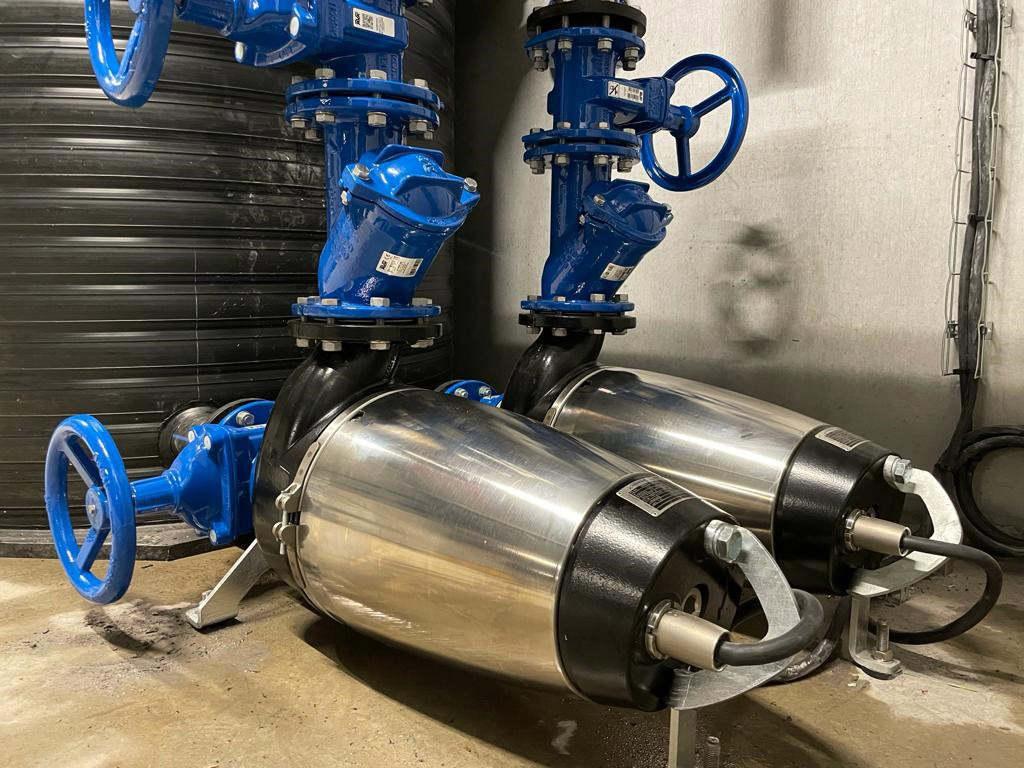
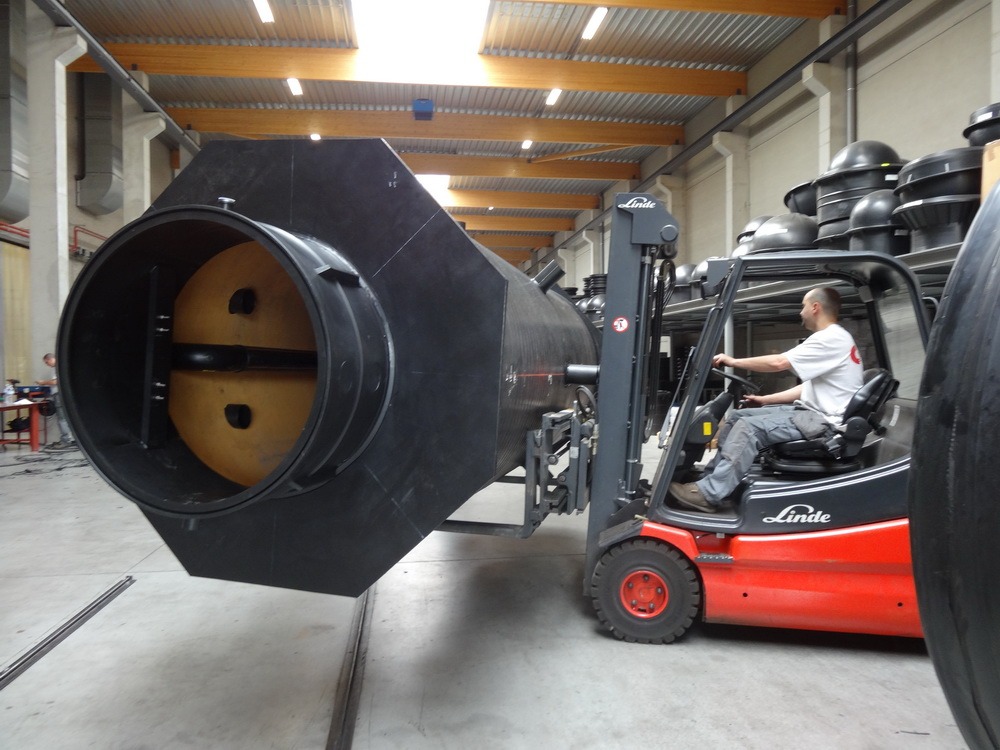
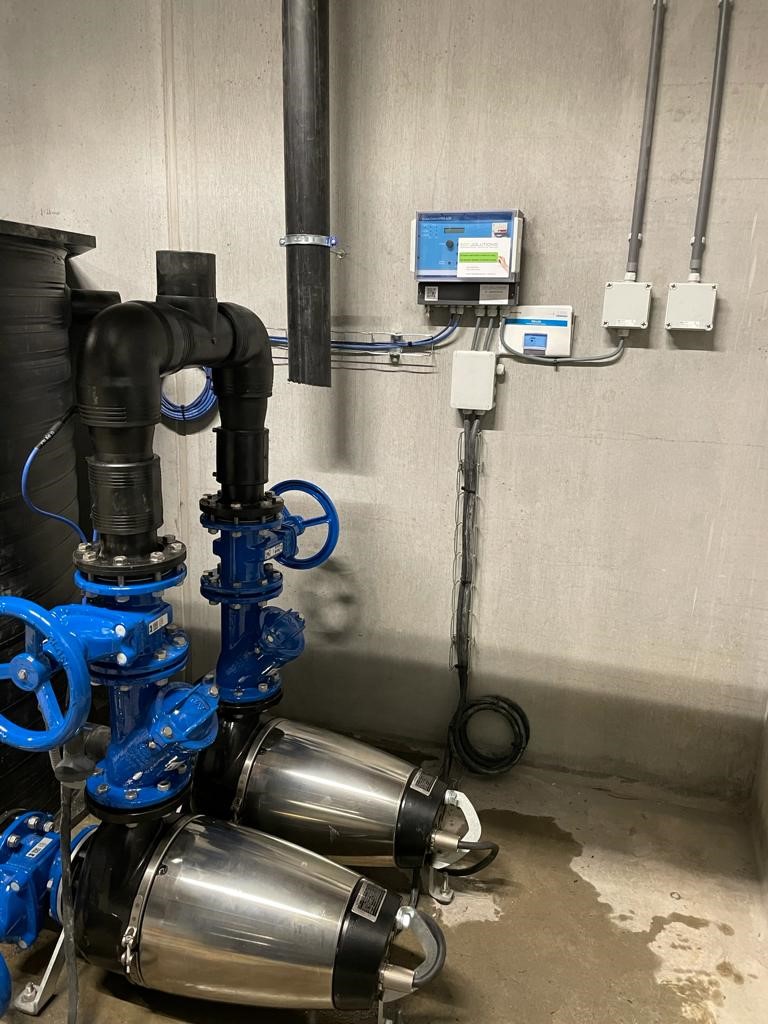
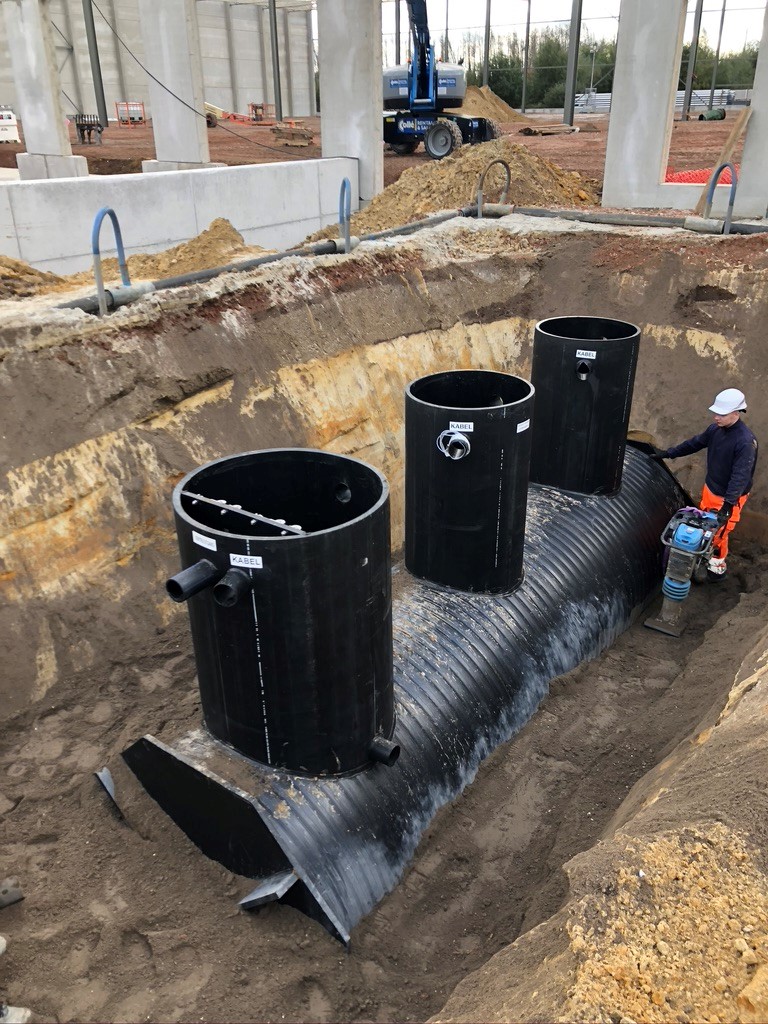
The new network comes together in three HDPE pump units, sized to handle significant flow rates:
20 l/s (Ø 1000, h 2.4 m)
40 l/s (Ø 1200, h 3.5 m)
60 l/s (Ø 1500, h 4.6 m),
In this system, the third pump outlet collects and discharges the water from the first two tanks into an open storage basin. All this water is then treated by a sanitation facility, after which it is released into the Samber after purification.
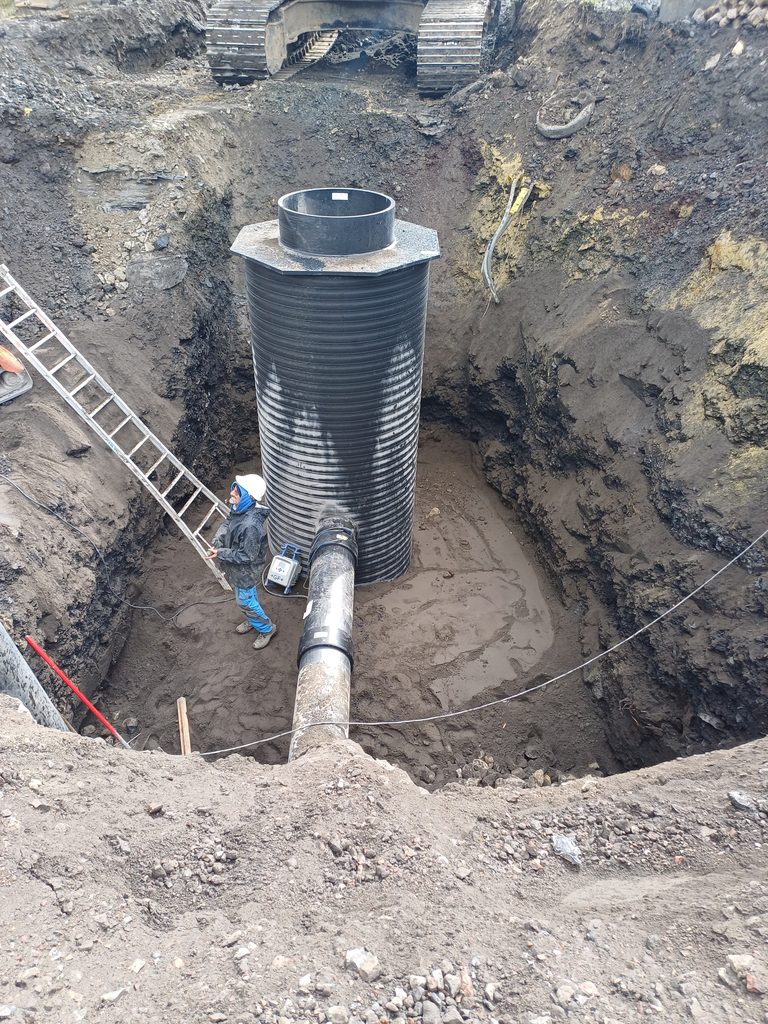
These custom-made installations, manufactured by Collinet, are equipped with GSM modules with autonomous batteries. This means that alarms can also be activated in the event of a power outage. An indispensable asset to prevent disruptions at a site with an important ecological function.
A shipyard in successive phases
After the full study of the future network was submitted, the plans had to be adjusted several times to accommodate the technical constraints and the reality on the ground. As soon as the study was approved, the customized production could be launched, followed by deliveries that were aligned with the pace of the work. The execution was entrusted to Sogeplant (earthworks and installation).
The entire project was closely monitored by Samuel, the account manager at Deschacht, who emphasizes:
« This project required continuous coordination between our study department, production, and the teams on site. Thanks to this synergy, we were able to offer robust technical solutions that were perfectly tailored to the customer’s needs.»