
What is XPS?
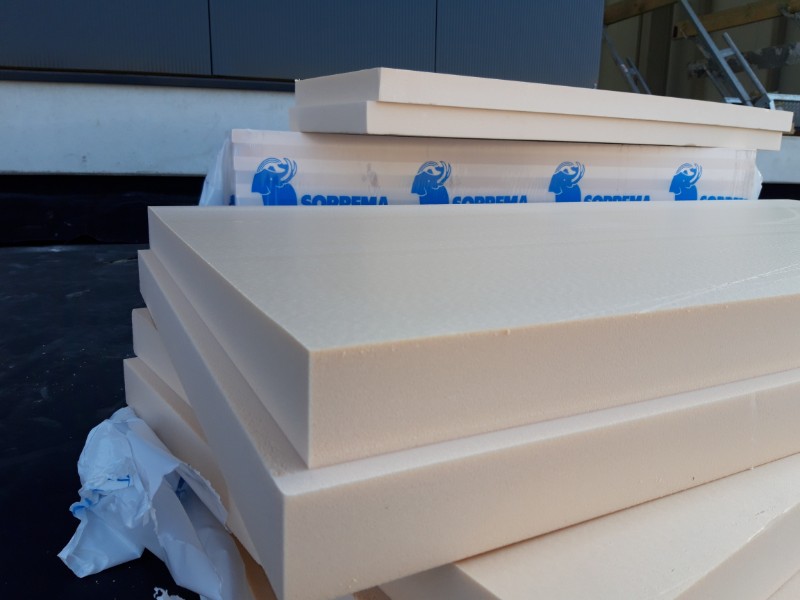
XPS (extruded polystyrene) is a versatile insulation material widely used in construction and industrial building. It is supplied as flat insulation boards with a closed-cell structure, which ensures excellent moisture resistance and high compressive strength.
Thanks to this closed-cell structure, XPS absorbs virtually no water and retains its insulating performance for a long time, even in damp or heavily loaded applications. In addition, the material has a higher compressive strength than EPS (expanded polystyrene or styrofoam).
Compared to EPS, XPS is therefore more resistant to loads and moisture, making it extremely suitable for applications such as foundations, floors, basement walls, and roofs.
Why choose XPS insulation at Deschacht?
At Deschacht, you choose not only high-quality XPS insulation, but also technical expertise and support tailored to your project. Our product range consists of high-compressive-strength and moisture-resistant XPS boards that perfectly meet the demands of industrial construction and demanding applications.
Thanks to partnerships with leading manufacturers, you are assured of consistent quality, reliable performance, and sustainable insulation solutions. Moreover, our technical advisors are ready to guide you in choosing the right materials and application methods. With Deschacht, you choose a reliable partner that thinks along with you in every phase of construction, from foundation to roof.
Advice on XPS insulation?
Looking for the right XPS insulation for your project?
The XPS insulation range from Deschacht
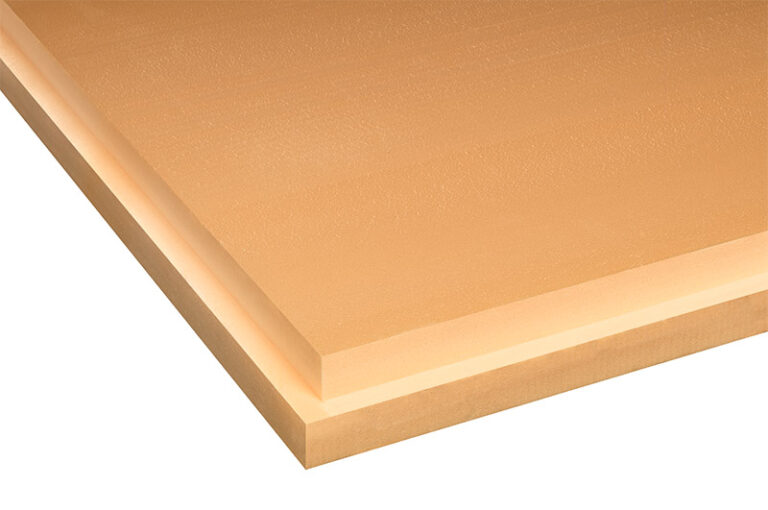
XPS 300kPa
Edge finish: rebate, straight edge, tongue and groove
Surface: smooth, textured (for improved adhesion of e.g. natural stone)
Application: floor insulation, perimeter, cavity wall, inverted roof

XPS 500kPa
Plate with increased compressive strength
Edge finish: rebate
Surface: smooth
Application: floor perimeter and inverted roof (green roof)

XPS 700kPa
Plate with increased compressive strength
Edge finish: rebate
Surface: smooth
Application: inverted roof floor
Item upon request

XPS CW 250kPa
Large plates 2500x600mm
Edge finish: tongue and groove
Surface: smooth
Application: perimeter, cavity wall insulation
XPS insulation is widely applicable in industrial construction
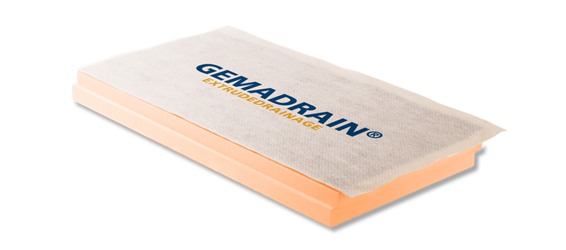
Foundation walls and basement insulation
Due to its closed-cell structure, XPS is extremely suitable for underground applications such as foundation walls and basement insulation. The material is virtually free of water absorption, which allows it to maintain its insulating performance even in damp conditions. In addition, it helps prevent mold formation and degradation of the insulation.

Floor insulation and parking roofs
XPS boards are available in high compressive strengths up to 700 kPa, making them suitable for heavy-duty applications. This makes them ideal for floor insulation in industrial buildings, warehouses, and parking garages, where long-term stability and load-bearing capacity are essential.
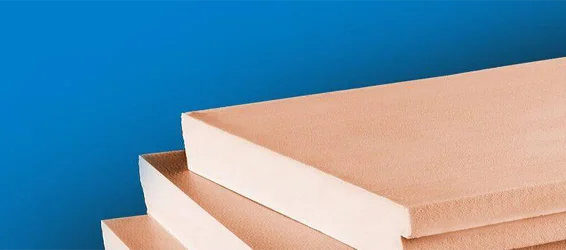
Inverted roofs
XPS is extremely suitable for use in inverted roofs, where the insulation is placed on top of the waterproof roof membrane. This structure offers optimal protection against weather conditions and mechanical stress, ensuring that the roof construction continues to perform sustainably and stably.
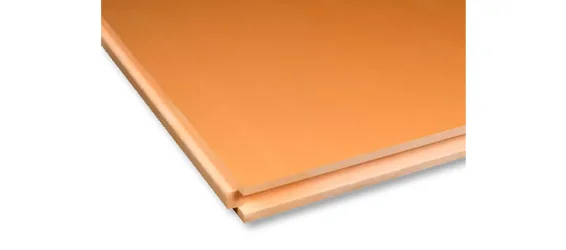
Cavity wall insulation
The dimensionally stable XPS boards are suitable for cavity wall insulation and ensure an efficient reduction of heat loss. This contributes to a better energy performance of the building and increased thermal comfort inside.
Technical advantages of XPS insulation
- high compressive strength: XPS boards are available with compressive strengths from 300 to 700 kPa, making them suitable for applications with heavy mechanical loads.
- excellent moisture resistance: the closed-cell structure prevents water absorption, which makes XPS particularly suitable for basements, foundations, and other damp applications.
- long lifespan: XPS retains its thermal performance for many years, which contributes to a durable and reliable construction solution.
- easy processing: the lightweight panels are easy to cut and install, without skin irritation, which increases workability on site.
- Recyclable: XPS insulation is 100% recyclable and is often manufactured using recycled raw materials, which contributes to circular and sustainable construction projects.
Sustainability and circular construction with XPS insulation
XPS insulation contributes to sustainable and circular construction projects thanks to its material composition and long lifespan.
- 100% recyclable: XPS panels can be fully recycled at the end of their useful life, which supports circular construction.
- recycled raw materials: XPS is produced with recycled EPS materials, originating from packaging and industrial residual streams, among other sources.
- efficient production: the production of XPS insulation is carried out with a focus on resource efficiency and the lowest possible environmental impact.
Comparison with alternative insulation materials
| Property | XPS | EPS (Expanded Polystyrene) | PIR/PUR |
|---|---|---|---|
| Compressive strength | High (up to 700 kPa) | Warehouse | Very high |
| Moisture resistance | Very good | Mediocre | Good |
| Lambda value | 0.029 - 0.036 W/mK | 0.035 - 0.040 W/mK | 0.022 - 0.027 W/mK |
| Recyclability | 100% | 100% | Limited |
| Fire safety | Warehouse (Class E) | Warehouse (Class E) | Higher (Class B) |
FAQ
1. When do you choose XPS instead of EPS?
XPS is the better choice when compressive load and moisture are a factor. The material has a higher compressive strength and absorbs virtually no water, making it more suitable for foundations, floors, parking decks, and inverted roofs than EPS.
2. What is the difference between XPS and PIR insulation?
PIR typically has a better lambda value and therefore a higher insulation value per centimeter. XPS, however, scores better on compressive strength and moisture resistance, which is why it is often used in practice under heavy loads or in contact with soil and water.
3. Is XPS suitable for heavily loaded floors?
Yes, XPS is available in compressive strengths from 300 to 700 kPa. This makes it suitable for use under industrial floors, warehouses, logistics centers, and parking garages where high loads occur.
4. Is XPS suitable for prefabricated and industrial construction systems?
Yes, thanks to its dimensional stability and fast workability, XPS is often used in prefabricated elements and industrial building systems where efficiency and precision are important.
5. Is XPS suitable for detailed solutions and thermal bridge interruption?
Yes, XPS is often used as a thermal break in building joints to reduce thermal bridges, for example at floor edges and foundation connections.