Infiltration crates: a solution for sustainable water management
Infiltration crates play a crucial role in an efficient rainwater management system. The infiltration crates can collecting, transporting, and gradually infiltrating rainwater into the soil. This prevents flooding, reduces pressure on sewage systems, and helps maintain groundwater reserves. Whether it concerns water from roofs, streets, parking lots, or other paved surfaces, infiltration crates offer a reliable solution for sustainable water management.
Infiltration crates can not only be used for infiltration, but also as buffer storage for rainwater. This is particularly interesting for areas where flooding is a problem or where delayed discharge into the sewer network is necessary. By combining infiltration crates with a delayed discharge or reuse system, rainwater can be efficiently utilized for, for example, irrigation or sanitary use.
The benefits of infiltration crates
- High intake and drainage capacity: they can efficiently collect and discharge large volumes of rainwater
- Storage capacity up to 95%: thanks to their design, they can store a very high volume of water
- Three-dimensional water permeability: water can infiltrate on all sides, ensuring optimal distribution
- Extremely high load capacity: suitable for high-load applications, even with low installation heights
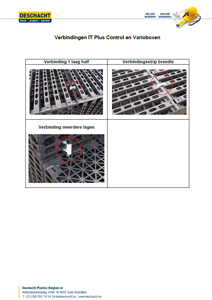
- Modular design: flexible horizontal and vertical connection options enable customized solutions
- Sustainable and certified: made from high-quality materials with a long service life and BENOR approved
Advice on rainwater infiltration?
Infiltration crates are versatile and offer a solution for rainwater infiltration.
When choosing infiltration crates, it is important to consider the load and bearing capacity. There are models available that are specifically designed for light applications, such as gardens and private driveways, as well as crates with high compressive strength that are suitable for roads and industrial sites. Depending on the application, it may be necessary to add extra reinforcement, such as pressure-distributing plates or a customized foundation layer.
Most infiltration crates are manufactured from recycled plastic, thereby contributing to circular construction and a reduced ecological footprint. In addition, they promote the natural replenishment of the groundwater table and reduce the impact of paving on the environment. This makes them a forward-looking solution for both urban and rural areas.
Infiltration crates play an increasingly important role in sustainable water management and are encouraged in many cities and municipalities through regulations and subsidies. Governments are imposing increasingly stringent requirements to infiltrate rainwater locally as much as possible and relieve the load on the sewer system. As a result, infiltration crates are not only an ecologically responsible choice, but they can also yield financial benefits for construction and infrastructure projects. Always check local regulations and subsidy options for an optimally integrated solution.
Different types of infiltration crates

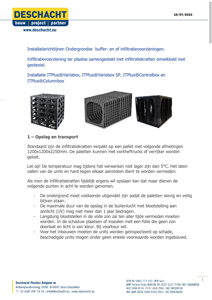
IT Plus Variobox
This versatile infiltration crate is designed for large-scale applications and offers connection and linking options on all sides. Available in heights from 200 to 600 mm and compatible with the IT-Plus Controlbox.
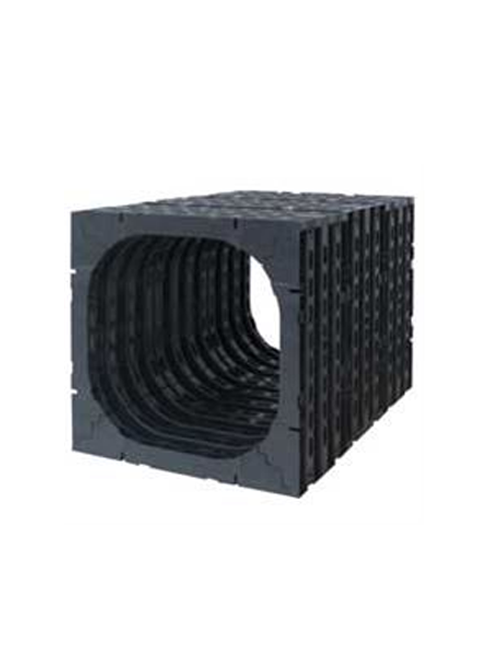
IT Plus Controlbox
Provides access for inspection and maintenance applications up to 500 mm. Compatible with the Variobox for an integrated infiltration system.
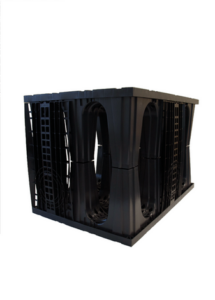
IT Plus Columnbox
This stackable infiltration crate enables efficient transport and smooth installation. Up to 70 elements can be packed on a single pallet, ensuring rapid placement. Fully compatible with the IT-Plus Control and Variobox.
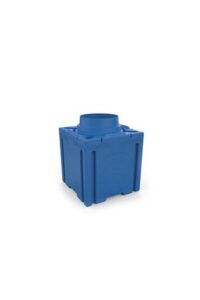
IT Plus Vivo Control
The IT Plus Vivo Control is a versatile PE infiltration crate that is perfectly suited for use as an inspection, sedimentation, control, or connection manhole. This custom infiltration crate is ideally combined with the Variobox or Controlbox for efficient and reliable water management.

IT Plus wrapped
A ready-to-use infiltration solution, suitable for installation under driveways. Pre-packaged in water-permeable BENOR-certified geotextile and equipped with ø160 mm connections (in & out) and an inspection channel, type SG29/29.
FAQ
1. How do infiltration crates work in a rainwater management project?
The water then gradually infiltrates into the soil through the open structure and the surrounding geotextile. This ensures controlled drainage, prevents flooding, and supports groundwater replenishment.
2. What are the main benefits of infiltration crates for infrastructure projects?
For infrastructure applications, infiltration crates offer several technical advantages:
- High storage capacity thanks to an open structure (up to approx. 95% water storage volume)
- relief of the sewer system through local infiltration
- three-dimensional water permeability for optimal distribution
- suitable for placement under paving (roads, parking lots, industry)
As a result, they are an efficient solution within sustainable drainage systems (SuDS)
3. When do you choose infiltration crates instead of buffering or discharge to the sewer system?
Infiltration crates are the right choice when:
- infiltration on private property is required (e.g., regulations or rainwater ordinance)
- sewage capacity is limited or needs to be relieved
- compact building is necessary (under roads, parking lots, buildings)
- groundwater replenishment is desired
They combine buffering and infiltration into a single system, making them a more efficient alternative to traditional buffers or direct discharge
4. Which points of attention are crucial for the design and placement?
For correct operation, a few design choices are essential:
- soil permeability determine (preliminary infiltration tests)
- use of geotextile to prevent clogging
- equipped with pre-filtration (grit chamber, leaf catcher) to reduce pollution
- correct sizing based on draining surface area and peak runoff rates
A well-designed system guarantees a long lifespan and minimal maintenance requirements.