
GVK piping systems
Lightweight and durable pipes for sewerage and infrastructure
GRP pipes (glass-fiber reinforced plastic) offer an efficient solution for sewerage and infrastructure projects where performance, speed, and durability are key. Thanks to their low weight and high strength, you can work faster on-site without compromising on reliability.
For projects with larger diameters and long routes, GRP pipes are a technically strong alternative to traditional materials.
Why choose GRP piping systems?
FRP combines structural strength with corrosion resistance. This ensures that pipelines maintain high performance, even in aggressive or demanding conditions.
Key benefits:
- high ring stiffness
- lightweight → quick installation
- corrosion-resistant
- long lifespan
Technical advice on GRP pipes?
Integrating GRP pipes into your design? Get support with sizing and material selection.
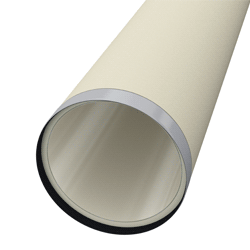
Applications
GRP pipes are primarily used in sewage and infrastructure projects where reliability and flow capacity are important.
- gravity sewer
- collectors
- industrial drainage
- road construction
FAQ
1. When do you choose GRP pipes?
For larger diameters and long runs where weight, ease of installation, and corrosion resistance are important.
2. What is ring stiffness?
The resistance of the pipe to external load. This is determined based on soil pressure and traffic.
3. How are GRP pipes connected?
Via sleeve connections with seals, which ensures a quick and watertight connection.
4. Are GRP pipes chemically resistant?
Yes, they are resistant to corrosion and aggressive media, making them suitable for sewerage and industry.
5. What is the lifespan of GRP pipes?
Due to their material composition, they maintain their performance over decades with minimal degradation.